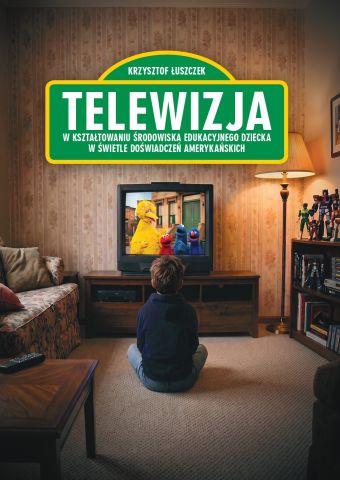
Rozprawy i Studia : Telewizja w kształtowaniu środowiska edukacyjnego dziecka w świetle doświadczeń amerykańskich
Szczegóły tomu
DOI: 10.18276/978-83-8419-152-1
Cytuj
Pełny tekst nie jest udostępniony w serwisie
| ISBN: | 978-83-8419-151-4 |
| ISBN (online): | 978-83-8419-152-1 |
| ISSN: | 0860-2751 |
| Autorzy: |
Krzysztof
Łuszczak

Uniwersytet Szczeciński |
| Data wydania: | 2026-11-10 |
| Data udostępnienia monografii: | |
| Dziedzina: | Dziedzina nauk społecznych |
| Dyscyplina: | pedagogika |
| OAI-PMH: | Metadane |


| |
Abstrakt
Prawie każda nowa technologia komunikacyjna, która upowszechniła się w XX wieku, niosła ze sobą nadzieje edukacyjne, a także nadzieję na powszechny i równy dostęp do edukacji. Dotyczyło to zwłaszcza radia, telewizji i internetu. Telewizja przez połowę wieku stanowiła najważniejsze medium służące komunikacji społecznej. Stąd również zainteresowanie telewizją jako narzędziem edukacji. Niniejsza monografia stara się sięgnąć do doświadczeń amerykańskich, aby zbudować model telewizji edukacyjnej i zwrócić uwagę na możliwości jej wykorzystania w dobie platform cyfrowych i sztucznej inteligencji. Amerykański system medialny jest rozległy, także w segmencie telewizji edukacyjnej, co daje możliwości zobaczenia szerokiego horyzontu zjawisk związanych z jej rozwojem.
Wykorzystana w pracy teoria archeologii mediów umożliwia spojrzenie na przeszłość mediów w sposób, który pozwala na traktowanie ich faz rozwojowych jako swego rodzaju rezerwuaru wciąż możliwych do wykorzystania i atrakcyjnych także dziś rozwiązań. Można również wyodrębnić pewne warstwy, których granice co prawda są dość płynne, jednak pozwalają na wskazanie elementów powtarzających się bądź oryginalnych dla danego etapu. Zbudowany model ma charakter idealny, raczej postulowany, jeżeli chodzi o przyszłość telewizji edukacyjnej. Próbuje oddać zależności między poszczególnymi elementami oraz uwidocznić ich hierarchię i dynamikę.
Od momentu, kiedy amerykańska telewizja po drugiej wojnie światowej zaczęła się intensywnie rozwijać, rozpoczęła się również debata publiczna nad wykorzystaniem telewizji jako narzędzia edukacji. Im szybciej to medium się komercjalizowało, tym debata przybierała na sile, znajdując swoje apogeum w wystąpieniu szefa FCC N.N. Minowa z początku lat sześćdziesiątych, który nazwał amerykańską telewizję „rozległym pustkowiem” (vast wasteland).
Pierwsze znaczące produkcje edukacyjne powstały na początku lat pięćdziesiątych, ale prawdziwy przełom nastąpił w końcu lat sześćdziesiątych wraz z powstaniem Ulicy Sezamkowej i Public Broadcasting Service (PBS). Producentka telewizyjna J.G. Cooney współtworzyła program dla przedszkolaków, który stał się na lata modelowym przykładem telewizyjnego projektu edukacyjnego. Produkcja Ulicy Sezamkowej ujawniła jednocześnie szereg detali, które należy wziąć pod uwagę, chcąc uzyskać zamierzone cele edukacyjne, a także wyzwania, z jakimi takie programy muszą się mierzyć. Twórcy programu zwrócili uwagę na potrzebę zaangażowania specjalistów z pedagogiki i psychologii i utrzymywania na wysokim poziomie planowania pedagogicznego. Z kolei specjaliści z zakresu produkcji telewizyjnej wnieśli szereg projektów czyniąc z programu widowisko, które mogło utrzymać na odpowiednim poziomie uwagę dziecka (np. wprowadzając do Ulicy Sezamkowej Muppety J. Hensona). Istotna stała się również kwestia zaangażowania rodziców i nauczycieli w całe przedsięwzięcie. W toku rozwoju zarówno Ulicy Sezamkowej, jak również innych programów edukacyjnych podstawowym wyzwaniem stało się finansowanie ich produkcji. Pojawiły się również naciski polityczne związane szerzej z rozwojem telewizji publicznej.
Pod koniec XX wieku telewizja edukacyjna musiała zmierzyć się z wyzwaniami, jakie niósł internet. Producenci zostali zmuszeni do obudowania emisji telewizyjnej różnego rodzaju platformami cyfrowymi i aplikacjami na smartfony, aby zapewnić programom zainteresowanie ze strony młodych widzów. Niektóre z emitowanych przez dekady programów edukacyjnych dla dzieci (np. Mister Rogers’ Neighborhood czy Barney & Friends) nie przetrwały próby czasu, jednak najbardziej znany program – Ulica Sezamkowa – poradził sobie z wyzwaniami nowej epoki. Z czasem jednak okazało się, że wykorzystanie np. smartfonów w edukacji jest mocno wątpliwe. Zjawisko obniżenia poziomu efektów edukacyjnych w niektórych krajach przypisano skupieniu dziecięcej uwagi na urządzeniach mobilnych (np. w Finlandii). Tymczasem telewizja edukacyjna dysponująca ogromnym doświadczeniem, wydaje się być mniej inwazyjna i bardziej przyjazna dzieciom.
Sprawnie działająca telewizja edukacyjna powinna być oparta na trzech filarach: państwowym, obywatelskim i rodzinnym. Przy czym moduł obywatelski powinien być centralny i oddziaływać zarówno na państwo, jak i rodzinę, zarówno jako mediator, jak i inspirator. To w tych trzech fundamentalnych blokach rodzą się siły, które działają na rzecz odpowiednio stanowionego prawa, potrafią wytworzyć presję społeczną na decydentów i otwartość na wykorzystanie telewizji edukacyjnej w rodzinie i szkole. Aby nie uległy rozproszeniu na końcowym etapie powinny poddać się planowaniu pedagogicznemu. Można go nazwać etapem realizacyjnym, służącym konkretnym produkcjom telewizyjnym.
Pod wieloma względami sytuacja jest dziś trudniejsza dla telewizji edukacyjnej niż w jej początkach. Uwaga dzieci jest dziś przesunięta w stronę mediów społecznościowych. One również mogą być płaszczyzną budowania projektów edukacyjnych, chociaż ich efekty są często przypadkowe i rozproszone. Z kolei rozwój sztucznej inteligencji może w niedługim czasie zdominować także edukację, jednak skutki tego rozwoju są nieprzewidywalne i niepewne. Natomiast na podstawie modelu telewizji edukacyjnej możemy wrócić do szerokiej debaty społecznej na temat interesu społecznego w mediach. Pozwala to rewitalizować narzędzie, które będzie przewidywalne i dzięki wieloletniemu doświadczeniu edukacyjnie efektywne.
Informacje
Wersja elektroniczna publikacji dostępna na licencji CC BY-SA 4.0 po 12 miesiącach od daty wprowadzenia do obrotu: listopad 2026
Wersję drukowaną publikacji można nabyć w sklepie Wydawnictwa Naukowego Uniwersytetu Szczecińskiego
Bibliografia (502)
- AACAP. (2025). Screen Time and Children. Pobrano z: https://www.aacap.org/aacap/ fffprint/article_print.aspx?dn=Children-And-Watching-TV-054 (3.10.2025).
- Abrams, Z. (2025). Classrooms are adapting to the use of artificial intelligence. Monitor on Psychology, 56 (1). Pobrano z: https://www.apa.org/monitor/2025/01/trends-classrooms- artificial-intelligence (18.09.2025).
- Abramson, A. (1987). The History of Television, 1880–1941. Jefferson, North Carolina and London: McFarland & Company.
- Abramson, A. (1995). Zworykin, Pioneer of Television. Urbana: University of Illinois Press.
- Abramson, A. (1998). The Invention of Television. W: A. Smith (red.), Television: An International History (s. 13–34). Oxford: Oxford University Press.
- Abramson, A. (2003). The History of Television, 1942 to 2000. Jefferson, North Carolina and London: McFarland & Company.
- Adamowski, J.W. (2008). System medialny Stanów Zjednoczonych. W: J.W. Adamowski (red.), Wybrane zagraniczne systemy medialne (s. 11–44). Warszawa: Wydawnictwa Akademickie i Profesjonalne.
- Adams, V. (1961). F.C.C. Head Bids TV Men Reform “Vast Wasteland”. Minow Charges Failure in Public Duty – Threatens to Use License Power F.C.C. Head Bids TV Industry Reform Its “Vast Wasteland: The New York Times, May 10. Pobrano z: https://www.nytimes.com/1961/05/10/archives/fcc-head-bids-tv-men-reform-vast- -wasteland-minow-charges-failure-in.html (8.07.2025).
- Alexander, A. (2001). Broadcast Networks and the Children’s Television Business. W: D.G Singer, J.L. Singer (red.), Handbook of Children and the Media (s. 495–505). Thousand Oaks, London, New York, Delhi: SAGE.
- Alexander, A., Benjamin, L.M., Hoerrner, H., Roe, D. (1998). “We’ll Be Back in a Moment”: A Content Analysis of Advertisements in Children’s Television in the 1950s’. Journal of Advertising, 27 (3), 1–9. DOI: 10.1080/00913367.1998.10673558.
- Alperowicz, C., Krock, R. (1983). Rocking the Boat: Celebrating 15 Years of Action for Children’s Television. Newtonville, MA: Action for Children’s Television.
- American Academy of Pediatrics. (2021). Beyond Screen Time: A Parent’s Guide to Media Use. Pediatric Patient Education, January 01. DOI: 10.1542/peo_document099.
- Anderson, D.R. (2020). Reflections on technologies for studying children and media. Journal of Children and Media, 14 (1), 131–140. DOI: 10.1080/17482798.2019.1704358.
- Anderson, D.R., Davidson, M.C. (2019). Receptive versus informative video screens: A role for the brain’s default mode network in learning from media. Computers and Human Behavior, 99(C), 168–180. DOI: 10.1016/j.chb.2019.05.008.
- Anderson, D.R., Pempek, T.A. (2005). Television and very young children. American Behavioral Scientist, 48 (5), 505–522. DOI: 10.1177/0002764204271506.
- Anderson, K. (1978). Television Fraud: The History and Implications of the Quiz Show Scandals. Westport and London: Greenwood Press.
- Anderson, R., Subrahmanyam, K. (2017). Digital Screen Media and Cognitive Development. Pediatrics, 140 (Supplement_2), S57–S61. DOI: 10.1542/peds.2016-1758C.
- Anger (2024). Meet Barney. Ep. 3, Full Episode – YouTube. Pobrano z: https://www.youtube. com/watch?v=cS9qoJ9DIuQ (29.08.2025).
- Anshari, M., Almunawar, M.N., Shahrill, M., Wicaksono, D.K., Huda, M. (2017). Smartphones usage in the classrooms: Learning aid or interference? Educational and Information Technologies, 22 (6), 3064–3079. DOI: 10.1007/s10639-017-9572-7.
- APT (2025). History of Alabama Public Television. Pobrano z: https://aptv.org/about/ history/ (7.10.2025).
- APTS (2020). Local Public Television Stations Rapidly Expand Remote Learning Services. Pobrano z: https://apts.org/news/press-releases/local-public-television-stations-rapidly- expand-remote-learning-services (7.10.2025).
- APTS (2025). Public Media Education Resources in Response to COVID-19 Pandemic. Pobrano z: https://apts.org/news/station-stories/public-media-education-resourcesin- response-covid-19-pandemic (7.10.2025).
- Arnett, T. (2021). Breaking the mold: How a global pandemic unlocks innovation in K-12 instruction. Pobrano z: https://www.christenseninstitute.org/wp-content/ uploads/2021/01/BL-Survey-1.07.21.pdf (21.03.2025).
- Arnott, L. (2017). Framing technological experiences in the early years. W: L. Arnott (red.), Digital Technologies and Learning in the Early Years (s. 7–19). London: SAGE. DOI: 10.4135/9781526414502.n2.
- Atkin, D.J., Greenberg, B.S., Baldwin, T.F. (1991). The home ecology of children’s television viewing: Parental mediation and the new video environment. Journal of Communication, 41, 40–52.
- Aubrey, J.S. (2004). Sex and Punishment: An Examination of Sexual Consequences and the Sexual Double Standard in Teen Programming. Sex Roles. A Journal of Research, 50, 505–514. DOI: 10.1023/B:SERS.0000023070.87195.07.
- Avallone, T. (reż.). (2022). I Love You, You Hate Me (serial dokumentalny). Peacock.
- Awang, A., Yakob, N., Hamzah, A., Talling, M.M. (2020). Exploring STEAM teaching in preschool using Fred Rogers approach. International Journal of Evaluation and Research in Education, 9(4), 1071–1078. DOI: 10.11591/ijere.v9i4.20674.
- Baker, G., Faxon-Mills, S., Huguet, A., Pane, J.F., Hamilton, L.S. (2022). Approaches and Obstacles to Promoting Media Literacy Education in U.S. Schools. Pobrano z: https://www.rand.org/pubs/research_reports/RRA112-19.html (9.04.2025).
- Balas, G.R. (2003). Recovering a Public Vision for Public Television. Lanham, Boulder, New York, Oxford: Rowman & Littlefield Publishers.
- Ball, S., Bogatz, G.A. (1970). The First Year of Sesame Street: An Evaluation. Princeton: Educational Testing Service.
- Bandura, A. (1965). Influence of Models’ Reinforcement Contingencies on the Acquisition of Imitative Responses. Journal of Personality and Social Psychology, 1, 589–595. DOI: 10.1037/h0022070.
- Bandura, A. (1972). Modeling Theory: Some Traditions, Trends, and Disputes. W: R.D. Parke (red.), Recent Trends in Social Learning Theory (s. 35–61). New York and London: Academic Press. DOI: 10.1016/C2013-0-11287-1.
- Bandura, A. (1986). Social Foundations of Thought and Action: A Social Cognitive Theory. Englewood Cliffs: Prentice Hall.
- Bandura, A., Ross, D., Ross, S.A. (1961). Transmission of Aggression Through Imitation of Aggressive Models. Journal of Abnormal and Social Psychology, 63, 575–582. DOI: 10.1037/h0045925.
- Bangemann, M. (1994). Europe and the Global Information Society. Pobrano z: https://op.europa.eu/en/publication-detail/-/publication/44dad16a-937d-4cb3-be07- 0022197d9459 (30.09.2025).
- Barber, B.R. (2008). Skonsumowani. Jak rynek psuje dzieci, infantylizuje dorosłych i połyka obywateli. Warszawa: Wydawnictwo MUZA.
- Barnouw, E. (1970). The Image Empire: A History of Broadcasting in the United States from 1953. Oxford: Oxford University Press.
- Baron, G.L., Bruillard, E. (1997). Information technology in French education: Implications for teacher education. Technology Pedagogy and Education, 6 (3), 241–254. DOI: 10.1080/14759399700200016.
- Barrineau, M. (1990). On the set of Barney. Entertainment, October 5. Pobrano z: https:// ew.com/article/1990/10/05/set-barney/# (26.04.2025).
- Baughman, J.L. (1997). „Show Business in the Living Room”: Management Expectations for American Television. Business and Economic History, 26 (2), 718–726. Pobrano z: https://www.jstor.org/stable/23703062 (2.07.2025).
- Bauman, Z., Leoncini, T. (2017). Płynne pokolenie. Warszawa: Czarna Owca.
- Bee, H. (2009). Psychologia rozwoju człowieka. Poznań: Zysk i S-ka.
- Belflower, M.A. (2022–2023). The Grown-Up Neighborhood: The Effect of Fred Rogers on Adult Beliefs About Benevolence. Inquiro, 11. Pobrano z: https://www.uab.edu/ inquiro/issues/current-issue/the-grown-up-neighborhood-the-effect-of-fred-rogers- on-adult-beliefs-about-benevolence (26.08.2025).
- Berdik, Ch. (2017). Schools Tap Secret Spectrum to Beam Free Internet to Students. Wired, 12.06.2017. Pobrano z: https://www.wired.com/story/schools-secret-spectrum-free- -internet-digital-divide (22.04.2021).
- Berdik, Ch. (2020). Revisiting the Potential Uses of Media in Children’s Education. New York: The Joan Ganz Cooney Center at Sesame Workshop.
- Bergreen, L. (1980). Look Now, Pay Later: The Rise of Network Broadcasting. New York: Doubleday and Company.
- Berkowitz, L. (1986). Advances in Experimental Social Psychology. T. 19. Lincoln: Academic Press.
- Bers, N.U. (2018). Coding as a Playground: Programming and Computational Thinking in the Early Childhood Classroom. Oxford: Routledge.
- Beyens, I., Valkenburg, P.M. (2019). Parental Media Mediation in Adolescence: A Comparative Study of Parent and Adolescent Reports. Journal of Broadcasting and Electronic Media, 63(4), 716–736. DOI: 10.1080/08838151.2019.1680071.
- Beyer, J. (2009). Peggy Charren. Pobrano z: https://jwa.org/encyclopedia/article/charren- peggy (13.09.2025).
- Bhattacherjee, A. (2012). Social Science Research: Principles, Methods, and Practices. Textbooks Collection, 3. Pobrano z: https://digitalcommons.usf.edu/cgi/viewcontent. cgi?article=1002&context=oa_textbooks (19.01.2024).
- Biakolo, K. (2020). A Brief History of the TV Dinner. Pobrano z: https://www.smithsonianmag. com/arts-culture/brief-history-tv-dinner-180976039/ (14.07.2025).
- Bickham, D.S., Wright, J.C., Huston, A.C. (2001). Attention, Comprehension, and the Educational Influences of Television. W: D.G. Singer, J.L. Singer (red.), Handbook of Children and the Media (s. 101–120). Thousand Oaks, London, New Delhi: Sage.
- Bilby, K. (1986). The General: David Sarnoff. New York: Harper & Row.
- Bleakley, A., Hennessy, M., Fishbein, M., Jordan, A. (2008). It Works Both Ways: The Relationship between Exposure to Sexual Content in the Media and Adolescent Sexual Behavior. Media Psychol., 11 (4), 443–461. DOI: 10.1080/15213260802491986.
- Bleakley, A., Jordan, A.B., Hennessy, M. (2013). The Relationship Between Parents’ and Children’s Television Viewing. Pediatrics, 132(2). DOI: 10.1542/peds.2012-3415.
- Blumenthal, H.J., Goodenough, O.R. (1998). The Business of Television. New York: Billboard Books.
- Boddy, W. (1990). Fifties Television: The Industry and Its Critics. Urbana and Chicago: University of Illinois Press.
- Boddy, W. (1998). The Beginnings of American Television. W: A. Smith (red.), Television. An International History (s. 23–37). New York: Oxford University Press.
- Bohn, T.W., Stromgren, R.L. (1987). Light and Shadows: A History of Motion Pictures. Palo Alto, CA: Mayfield Publishing Company.
- Borgenicht, D. (1998). Sesame Street: Unpaved: Scripts, Stories, Secrets and Songs. New York: Hyperion.
- Brain, K., Reid, I., Boyes, L.C. (2006). Teachers as Mediators Between Educational Policy and Practice. Educational Studies, 32(4), 411–423. DOI: 10.1080/03055690600850396.
- Brame, C.J. (2016). Effective Educational Videos: Principles and Guidelines for Maximizing Student Learning from Video Content. CBE Life Sci Educ, 15(4). DOI: 10.1187/cbe.16-03-0125.
- Braun, J.M. (2013). Noncomercial Radio. W: M.A. Blauchard (red.), History of the Mass Media in the United States. An Encyclopedia (s. 472–473). London and New York: Routledge.
- Brooks, T., Marsh, E.F. (1995). The Complete Directory to Prime Time Network and Cable TV Shows, 1946–present. New York: Ballantine Books.
- Brown, J., Walsh-Childers, K., Geary, C. (1990). Television and Adolescent Sexuality. Journal of Adolescent Health Care, 11, 62–70.
- Bryant, J., Vorderer, P. (2013). Preface. W: J. Bryant, P. Vorderer (red.), Psychology of Entertainment (s. IX–XIII). New York, London: Taylor & Francis Group. DOI: 10.4324/9780203873694.
- Bryant, K. (2025). 13 Good Neighbor Lessons We Learned from Mister Rogers. Pobrano z: https://www.rd.com/list/good-neighbor-lessons-mr-rogers/ (26.08.2025).
- Buckingham, D. (2000). The Making of Citizens: Young People, News and Politics. London, New York: Routledge.
- Buckingham, D. (2003). Media Education and the End of the Critical Consumer. Harvard Educational Review, 73, 309–327. DOI: 10.17763/haer.73.3.c149w3g81t381p67.
- Buckingham, D. (2020). Childhood and the Mediatization of Marketing, 1955–1965. Pobrano z: https://davidbuckingham.net/wp-content/uploads/2020/02/childhood- -mediatization-marketing.pdf (26.07.2025).
- Buijzen, M., Molen van der, J.W., Sondij, P. (2007). Parental Mediation of Children’s Emotional Responses to a Violent News Event. Communication Research, 34(2), 212–230. DOI: 10.1177/0093650206298070.
- Buijzen, M., Valkenburg, P. (2003). The Effects of Television Advertising on Materialism, Parent-Child Conflict, and Unhappiness: A Review of Research. Journal of Applied Developmental Psychology, 24, 437–456. DOI: 10.1016/S0193-3973(03)00072-8.
- Bulger, M., Madden, M., Sobel, K., Davison, P. (2021). The Missing Middle. Reimagining a Future for Tweens, Teens, and Public Media. New York: The Joan Ganz Cooney Center at Sesame Workshop.
- Butler, M.A. (2021). Fred Rogers’ Methodology of Beingness. Pobrano z: https://www.fredrogersinstitute. org/resources/fred-rogers-methodology-of-beingness (1.04.2025).
- Campus Journal; Vote to Sell TV Station Splits Iowans (1992). The New York Times, 22 July, 17. Pobrano z: https://www.nytimes.com/1992/07/22/news/campus-journal- -vote-to-sell-tv-station-splits-iowans.html (26.11.2025).
- Cardona, M.A., Rodriguez, R.J., Ishmael, K. (2023). Artificial Intelligence and the Future of Teaching and Learning. Washington, DC: U.S. Department of Education.
- Carnagie II (1979). Report of the Carnegie Commission on the Future of Public Broadcasting – Summary of Findings and Recommendations. Pobrano z: https://current. org/1979/01/a-public-trust-the-report-of-the-carnegie-commission-on-the-future- of-public-broadcasting-carnegie-ii/?wallit_nosession=1 (22.11.2025).
- Carnegie Commission (1967). Public Television: A Program for Action. Raport of the Carnegie Commission. New York: Harper & Row.
- Carter, B., Kalk, N. (2024). Teens with problematic smartphone use are twice as likely to have anxiety – and many are eager to cut down. Pobrano z: https://www.kcl.ac.uk/ news/teens-with-problematic-smartphone-use-are-twice-as-likely-to-have-anxiety- -and-many-are-eager-to-cut-down (1.10.2025).
- Carter, D., Strickland, S. (1975). TV Violence and the Child. Evolution and Fate of the Surgeon General’s Report. New York: Russell Sage Foundation.
- Castleman, H., Podrazik, W.J. (1982). Watching TV. Four Decades of American Television. New York: McGraw-Hill Book Company.
- Chan, K., Prendergast, G. (2007). Materialism and Social Comparison among Adolescents. Social Behavior and Personality: An International Journal, 35, 213–228. DOI: 10.2224/sbp.2007.35.2.213.
- Chandler, D., Griffiths, M. (2000). Gender-differentiated Production Features in Toy Commercials. Journal of Broadcasting and Electronic Media, 44, 503–520.
- Chaplin, L.N., John, D.R. (2007). Growing up in a Material World: Age Differences in Children’s Responses to Possessions. Journal of Consumer Research, 34 (4), 480–493. DOI: 10.1086/518546.
- Charren, P., Sandler, M.W. (1983). Changing Channels: Livin (sensibly) with Television. Boston: Addison-Wesley.
- Children’s Television Act (1990). Pobrano z: https://www.congress.gov/bill/101st-congress/ house-bill/1677/text (13.09.2025).
- Choukas-Bradley, S., Giletta, M., Widman, L., Cohen, G.L., Prinstein, M.J. (2014). Experimentally Measured Susceptibility to Peer Influence and Adolescent Sexual Behavior Trajectories: A Preliminary Study. Dev Psychol., 50 (9), 2221–2227. DOI: 10.1037/a0037300.
- Clare, J., Butler, M., Rowland, M. (2025). School Behaviour Improving After Mobile Phone Ban and Vaping Reforms. Pobrano z: https://ministers.education.gov.au/ clare/school-behaviour-improving-after-mobile-phone-ban-and-vaping-reforms (4.10.2025).
- Clarendon, D. (2024). Barney Is Back With a New Show – Why Do People Hate the Purple T. Rex Anyway? Pobrano z: https://www.tvinsider.com/1155668/barneys-world-barney- and-friends-backlash-explained/ (26.08.2025).
- Clayton, K., Murphy, A. (2016). Smartphone Apps in Education: Students Create Videos to Teach Smartphone Use as Tool for Learning. Journal of Media Literacy Education, 8, 99–109. Pobrano z: https://digitalcommons.uri.edu/cgi/viewcontent.cgi?article= 1262&context=jmle (30.09.2025).
- Cline, V.B., Croft, R.G., Courrier, S. (1973). Desensitization of Children to Television Violence. Journal of Personality and Social Psychology, 27(3), 360–365. DOI: 10.1037/h0034945.
- Coates, B., Pusser, H.E., Goodman, I. (1976). The Influence of “Sesame Street” and “Mister Rogers’ Neighborhood” on Children’s Social Behavior in the Preschool. Child Development, 47 (1), 138–144. DOI: 10.2307/1128292.
- Cole, Ch., Lee, J.H., Bucuvalas, A., Sirali, Y. (2018). Seven Essential Elements for Creating Effective Children’s Media to Promote Peacebuilding: Lessons from International Coproductions of Sesame Street and Other Children’s Media Programs. New Directions for Child and Adolescent Development, 159, 55–69. DOI: 10.1002/cad.20229.
- Common Sense Media (2025). Pobrano z: https://www.commonsensemedia.org (15.09.2025).
- Comstock, G., Paik, H. (1991). Television and the American Child. San Diego, CA: Academic Press.
- Congress.gov. (2022). S.4490 - Digital Citizenship and Media Literacy Act. Pobrano z: https://www.congress.gov/bill/117th-congress/senate-bill/4490/text (20.09.2025).
- Conway, M. (2009). The Origins of Television News in America. The Visualizers of CBS in the 1940s. New York, Bern, Berlin, Bruxelles, Frankfurt am Main, Oxford, Wien: Peter Lang Inc., International Academic Publishers.
- Cook, D.T. (2004). The Commodification of Childhood: The Children’s Clothing Industry and the Rise of the Child Consumer. Durham and London: Duke University Press.
- Cooney, J.G. (1966). Potential Uses of Television in Preschool Education. Pobrano z: https://files.eric.ed.gov/fulltext/ED604064.pdf (7.11.2022).
- Cortés-Albornoz, M.C., Ramírez-Guerrero, S., García-Guáqueta, D.P., Vélez-Van- -Meerbeke, A., Talero-Gutiérrez, C. (2023). Effects of remote learning during COVID-19 lockdown on children’s learning abilities and school performance: A systematic review. International Journal of Educational Development, 14. DOI: 10.1016/j.ijedudev.2023.102835.
- Council of the Great City Schools. (2020). Districts Partner with Local TV Stations to Provide Educational Programming. Pobrano z: https://www.isbe.net/Documents/ Press-Release-TV-Partnerships-20200504.pdf (8.10.2025).
- Crawford, P.A. (2023). Our Proud Heritage. Intentional use of technology to foster learning and relationships: The legacy of Fred Rogers. Young Children, 78 (4). Pobrano z: https://www.naeyc.org/resources/pubs/yc/winter2023/our-proud-heritage (23.08.2025).
- Cronin, Z. (2023). Digital K-12 Curriculum: Everything You Need to Know. Pobrano z: https://www.kiddom.co/resources/digital-k-12-currriculum-the-ultimate-guide (27.10.2025).
- Culver, S.H., Redmond, T. (2019). Media Literacy Snapshot. National Association for Media Literacy Education. Pobrano z: https://namle.org/wp-content/uploads/2020/10/ SOML_FINAL.pdf (26.11.2025).
- Curry, N.E. (2019). The Reality of Make-Believe. W: M. Collins, M.M. Kimmel (red.), Mister Rogers’ Neighborhood. Children, Television and Fred Rogers (s. 51–66). Pittsburgh: University of Pittsburgh Press.
- Danzig, P.A. (2025). Elmo Understands: The Mental Health Power of “Sesame Street”. Pobrano z: https://www.psychologytoday.com/us/blog/dont-toy-with-me/202505/ elmo-understands-the-mental-health-power-of-sesame-street (28.08.2025).
- Dash, S., Kamath, U., Rao, G., Prakash, J., Mishra, S. (2016). Audio–visual aid in teaching “fatty liver”. Biochem. Mol. Biol. Educ., 44, 241–245. DOI: 10.1002/bmb.20935.
- Davies, J.J., Centile, D.A. (2012). Responses to children’s media use in families with and without siblings: A family development perspective. Family Relations, 61(3), 410–425.
- Davis, J. (2011). Children’s Television, 1947–1990: Over 200 Series, Game and Variety Shows, Cartoons, Educational Programs and Specials. North Carolina, NC: McFarland & Company.
- Davis, M. (2008). Street Gang: The Complete History of Sesame Street. New York: Viking Press.
- Davis, S.B., Vane, O., Kräutli, F. (2021). Can I believe what I see? Data visualization and trust in the humanities. Interdisciplinary Science Reviews, 46 (4), 522–546. DOI: 10.1080/03080188.2021.1872874.
- Diana, L., Elkus, L. (1956). Educational Television in Pittsburgh. The Quarterly of Film Radio and Television, 3, 312–317. DOI: 10.2307/1209989.
- Diaz-Infante, N., Lazar, M., Ram, S., Ray, A. (2022). Demand for online education is growing. Are providers ready? Pobrano z: https://www.mckinsey.com/industries/ education/our-insights/demand-for-online-education-is-growing-are-providers- -ready (13.10.2025).
- Diller, L. (2008). Mr. Rogers Was Wrong. Pobrano z: https://www.psychologytoday.com/ us/blog/the-last-normal-child/200804/mr-rogers-was-wrong (9.04.2025).
- Discovery Education Research & Analytics (2022). Discovery Education’s Impact on Student Achievement. Pobrano z: https://www-media.discoveryeducation.com/ wp-content/uploads/2023/01/Discovery-Educations-Impact-On-Student-Achievement. pdf?_gl=1ux671v_gcl_auNjYzMTE3NTA4LjE3NjE0ODAwODc._gaMTAzMDk0Njg3NC4xNzYxNDgwMDg3_ ga_QGF5X0KQV5*czE3NjE0ODAwODckbzEkZzAkdDE3NjE0ODAwODckajYwJGwwJGgw (27.10.2025).
- Distance Learning Institute (2024). Educational Television: History, Strengths, and Challenges in the Learning Landscape. Pobrano z: https://distancelearning.institute/ educational-communication-technologies/educational-television-history-strengths- challenges-learning-landscape/ (27.10.2024).
- Donohue, Ch. (2017). Digital Age Family Engagement: The Role of Media Mentors. Technology and Family Engagement, March/April. Pobrano z: https://dcf.wisconsin. gov/files/ccic/pdf/articles/digital-age-family-engagement.pdf (25.09.2025).
- Dr. Vladimir K. Zworykin: 1889–1982. Broadcast Engineering, September, 36–42.
- Dunning, J. (1998). On the Air: The Encyclopedia of Old-Time Radio. Oxford: Oxford University Press.
- Eakin, M. (2022). How ‘Barney & Friends’ Grew from Nothing and Came to Inspire Hate from So Many. Current, October 18. Pobrano z: https://current.org/2022/10/ how-barney-friends-grew-from-nothing-and-came-to-inspire-hate-from-so-many/? wallit_nosession=1 (26.04.2025).
- Eatwell, R., Goodwin, M. (2018). National Populism: The Revolt Against Liberal Democracy. New York: Pelican Books.
- Eggerton, J. (2019). FCC Gives Broadcasters More KidVid Flexibility. Pobrano z: https://www.nexttv.com/news/fcc-gives-broadcasters-more-kidvid-flexibility (15.09.2019).
- Ellis, J.C. (1979). A History of Film. Englewood Cliffs, NJ: Prentice-Hall.
- Ember, M., Emery, E., Roberts, N. (1997). Press and America, The: An Interpretive History of the Mass Media. London: Pearson.
- Engelman, R. (1996). Public Radio and Television in America. A Political History. Thousand Oaks, CA: SAGE.
- Ewin, C.A., Reupert, A.E., McLean, L.A., Ewin, Ch.J. (2021). The impact of joint media engagement on parent-child interactions: a systematic review. Human Behavior and Emerging Technologies, 3(2), 230–254. DOI: 10.1002/hbe2.203.
- Faguy, A., Blasey, L., Morris, R. (2024). US States Want to Ban Phones in Schools. It Might Be a Challenge. BBC, June 22. Pobrano z: https://www.bbc.com/news/articles/ ce99443qweno (1.10.2025).
- Fallows, J. (2011). Where the Phrase ‘Vast Wasteland’ Came From. The Atlantic, May 11. Pobrano z: https://www.theatlantic.com/politics/archive/2011/05/where-the-phrase- vast-wasteland-came-from/238743/ (7.07.2011).
- FCC. (2021). Children’s Educational Television. Pobrano z: https://www.fcc.gov/consumers/ guides/childrens-educational-television (13.09.2025).
- Federal Communication Commission (1953). Eighteenth Annual Report. Washington: U.S. Government Printing Office.
- Feinbloom, R.I. (1971). Action for Children’s Television: How Pediatricians Can Help the ACT. Pediatrics, 47(3), 630–631. DOI: 10.1542/peds.47.3.630a.
- Feldman, E. (2023). Lloyd Morrisett, Co-Creator of Sesame Street, Dies at 93. Smithsonian Magazine, January 25. Pobrano z: https://www.smithsonianmag.com/smart-news/ lloyd-morrisett-creator-of-sesame-street-dies-at-93-180981505/ (20.05.2023).
- Ferguson, C.J., Faye, C. (2018). A History of Panic Over Entertainment Technology. Behavioral Scientist, January 1. Pobrano z: https://behavioralscientist.org/history- -panic-entertainment-technology/ (19.07.2025).
- Ferguson, C.J., Muñoz, M.E., Garza, A., Galindo, M. (2014). Concurrent and Prospective Analyses of Peer, Television and Social Media Influences on Body Dissatisfaction, Eating Disorder Symptoms and Life Satisfaction in Adolescent Girls. J Youth Adolesc., 43 (1), 1–14. DOI: 10.1007/s10964-012-9898-9.
- Ferretti, F. (1972). Educational television. American Libraries, 3 (4), 366–384.
- Feshbach, S. (1955). The drive-reducing function of fantasy behavior. The Journal of Abnormal and Social Psychology, 50 (1), 3–11. DOI: 10.1037/h0042214.
- Fessenden, M. (2015). A Brief History of Sesame Street’s Snuffleupagus Identity Crisis. Pobrano z: https://www.smithsonianmag.com/smart-news/brief-history-sesame- -streets-snuffleupagus-iidentity-crisis-180957351/ (27.08.2025).
- Feulner, E.J. (1998). Unintended Consequences. Pobrano z: https://www.heritage.org/ health-care-reform/commentary/unintended-consequences (15.09.2025).
- Finney, D.P. (2020). Betty Lou and ‘House with the Magic Window’ entertained Iowans for 43 years on WOI-TV. The Des Moines Register, 22 March. Pobrano z: https:// eu.desmoinesregister.com/story/news/2019/01/29/des-moines-iowa-ames-television- house-with-the-magic-window-betty-lou-varnum-woitv-floppy-show-duane/ 2715255002 (7.04.2021).
- Fisch, S.M., Kirkorian, H.L., Anderson, D.R. (2005). Transfer of learning in informal education. W: J. Mestre (red.), Transfer of Learning: Research and Perspectives (s. 371–393). Greenwich, CT: Information Age Publishing.
- Fisch, S.M., Lesh, R., Motoki, E., Crespo, S., Melfi, V. (2014). Cross-platform learning: How do children learn from multiple media? W: F.C. Blumberg (red.), Learning by Playing: Video Gaming in Education (s. 207–219). Oxford: Oxford University Press. DOI: 10.1093/acprof:osobl/9780199896646.003.0014.
- Fisch, S.M., Truglio, R.T., Cole, Ch.F. (1999). The Impact of Sesame Street on Preschool Children: A Review and Synthesis of 30 Years’ Research. Media Psychology, 1(2), 165–190. DOI: 10.1207/s1532785xmep0102_5.
- Fish, S.M., Bernstein, L. (2001). Formative Research Revealed: Methodological and Process Issues in Formative Research. W: Fisch, S.M., Truglio, R.T. (red.), ‘G’ is Growing: Thirty Years of Research on Children and Sesame Street (s. 39–60). Mahwah, NJ: Lawrence Erlbaum Publisher.
- Fisher, D.A., Hill, D.L., Grube, J.W., Bersamin, M.M., Walker, S., Gruber, E.L. (2009). Televised sexual content and parental mediation: Influences on adolescent sexuality. Media Psychol., 12 (2), 121–147. DOI: 10.1080/15213260902849901.
- Fisher, J.E. (2012). KUHT-TV: The University of Houston’s Second Generation. Houston History Magazine, 10 (1), 30–34.
- Fleisher, Ch. (2019). Learning from Sesame Street. Pobrano z: https://www.aeaweb.org/ research/sesame-street-television-impact-early-childhood-education-melissa-kearney- interview (29.08.2025).
- Flock, E. (2013). “Sesame Street” Tackles Incarceration Through Muppet With Father in Jail. Pobrano z: https://www.usnews.com/news/articles/2013/07/17/sesame-street- tackles-incarceration-through-muppet-with-father-in-jail (8.08.2025).
- Fox, M. (2012). Eugene Polley, Conjuror of a Device That Changed TV Habits, Dies at 96. The New York Times, May 22. Pobrano z: https://www.nytimes.com/2012/05/23/business/ eugene-t-polley-inventor-of-the-wireless-tv-remote-dies-at-96.html (11.03.2021).
- Frau-Meigs, D. (2006). Media Education. A Kit for Teachers, Students, Parents and Professionals. Paris: UNESCO. Pobrano z: https://unesdoc.unesco.org/ark:/48223/ pf0000149278 (24.09.2025).
- Fred Rogers Institute (2025). Fundamentals of Learning and Growing. Pobrano z: https:// www.fredrogersinstitute.org/files/resources/97/sixfundementalsredesign_v5_compressed. pdf (23.08.2025).
- Fred Rogers Production (2025). Curriculum: Self-control and Emotional Regulation. Pobrano z: https://www.fredrogers.org/curriculum/self-control-and-emotional-regulation/ (26.08.2025).
- Fred Rogers Production (2025). Mister Rogers’ Neighborhood. Pobrano z: https://www.fredrogers. org/production/mister-rogers-neighborhood (26.03.2025).
- Fred Rogers Productions (2025). Lady Aberlin/Betty Aberlin. Pobrano z: https:// www.misterrogers.org/articles/lady-aberlin (26.03.2025).
- French, S., Ravn, S., Balcaite, E., Moore, E. (2023). Understanding students’ views on the efficacy of video technology to promote engagement in higher education. Pacific Journal of Technology Enhanced Learning, 1(2), 1–14. DOI: 10.24135/pjtel.v1i2.172.
- Frigg, R. (2010). Models and fiction. Synthese, 172, 251–268.
- Fulkerson, J., Neumark-Sztainer, D., Story, M. (2006). Adolescent and parent views of family meals. Journal of the American Dietetic Association, 106(4), 526–532. DOI: 10.1016/j.jada.2006.01.006.
- Fund for Vulnerable Children (2025). The Joan Ganz Cooney Fund for Vulnerable Children. Pobrano z: https://sesameworkshop.org/about-us/partners/joan-ganz-cooney- fund/ (27.08.2025).
- Gadberry, S. (1974). Television as Baby-Sitter: A Field Comparison of Preschoolers’ Behavior During Playtime and During Television Viewing. Child Development, 45, 1132–1136.
- Gantz, W. (1982). Television the Surrogate Parent: Uses and Correlates of Television as Babysitter. Pobrano z: https://files.eric.ed.gov/fulltext/ED218650.pdf (16.07.2025).
- Gantz, W., Masland, J. (1986). Television as Babysitter. Journalism Quarterly, 63(3), 530–536.
- Garner, J., Ashley, M. (2018). It’s Saturday Morning!: Celebrating the Golden Era of Cartoons 1960s–1990s. Bellevue, WA: becker & mayer! Books.
- Garry, P.M. (2009). Action for Children’s Television v. Federal Communications Commission (D.C. Cir.) Pobrano z: https://firstamendment.mtsu.edu/article/action-for- -childrens-television-v-federal-communications-commission-d-c-cir/# (12.09.2025).
- Gecker, J. (2024). Kids are using phones in class, even when it’s against the rules. Should schools ban them all day? Pobrano z: https://apnews.com/article/school-cell-phone- -ban-01fd6293a84a2e4e401708b15cb71d36 (1.10.2025).
- Gerbner, G., Gross, L., Morgan, M., Signorielli, N. (1989). Living with Television: The Dynamics of the Cultivation Process. W: J. Bryant, D. Zillmann (red.), Perspectives on Media Effects (s. 17–48). New York: Routledge.
- Gibbon, S.Y., Palmer, E.L. (1970). ‘Pre-reading Sesame Street’. Research Report Prepared for the Committee on Reading of the National Academy of Education. New York: CTW.
- Gibson, A. (2017). How Sesame Street Helps Children Learn for Life. Pobrano z: https:// www.pbs.org/education/blogs/pbs-in-the-classroom/how-sesame-street-helps-children- learn-for-life/ (27.08.2025).
- Giere, R.N. (2009). Why scientific models should not be regarded as works fiction. W: M. Suárez (red.), Fictions in Science: Philosophical Essays on Modeling and Idealization (s. 248–258). London: Routledge.
- Goban-Klas, T. (1999). Media i komunikowanie masowe. Warszawa: PWN.
- Godzic, W. (1999). Telewizja jako kultura. Kraków: Rabid.
- Godzic, W. (2001). „Wielki Brat” a sprawa polska. W: W. Godzic (red.), Podglądanie „Wielkiego Brata” (s. 13–23). Kraków: Rabid.
- Godzic, W. (2001). Rozumieć telewizję. Kraków: Rabid.
- Golka, B. (2004). System medialny Stanów Zjednoczonych. Warszawa: WSiP.
- Gōmez-García, M., Soto-Varela, R., Morón-Marchena, J.A., del Pino-Espejo, M.J. (2020). Using mobile devices for educational purposes in compulsory secondary education to improve student’s learning achievements. Sustainability, 12 (9). DOI: 10.3390/su12093724.
- Goodman, M. (2010). Dr. Toon: When Reagan Met Optimus Prime. ANIMATIONWorld, 12 October. Pobrano z: https://www.awn.com/animationworld/dr-toon-when-reagan- met-optimus-prime (5.05.2021).
- Горохов, П.К. (1964). Б. Л. Розинг: Основоположник электронного телевидения. Москва: Наука.
- Gottman, J. (1998). Raising an Emotionally Intelligent Child: The Heart of Parenting. New York: Simon & Schuster.
- Gould, J. (1948). The Video “Freeze”. New York Times, 3 October, s. 9.
- Gould, J. (1953). Television in Review; ‘Ding Dong School’, a Worthwhile Video Program Directed at Children, Stubs Toe on Commercialism. New York Times, 1 April, s. 41.
- Gould, R. (2024). Major theories of child development: frameworks for learning. Pobrano z: https://www.amu.apus.edu/area-of-study/education/resources/major-theories-of- -child-development/ (13.08.2025).
- Groen, J.F., Quigley, B., Herry, Y. (2016). Examining the Use of Lecture Capture Technology: Implications for Teaching and Learning. The Canadian Journal for the Scholarship of Teaching and Learning, 7(1). DOI: 10.5206/cjsotl-rcacea.2016.1.8.
- Gunter, B., McAleer, J. (1997). Children & Television. London, New York: Routledge.
- Guthrie, M. (2019). Where ‘Sesame Street’ Gets its Funding – and How It Nearly Went Broke. The Hollywood Reporter, 6 February. Pobrano z: https://www.hollywoodreporter. com/news/general-news/sesame-street-gets-funding-how-it-went-broke-1183032 (17.05.2021).
- Guy, W. (1996). The Theology of Mister Rogers’ Neighborhood. W: M. Collins, M.M. Kimmel (red.), Mister Rogers Neighborhood: Children, Television and Fred Rogers. (s. 101–121). Pittsburgh: University of Pittsburgh Press.
- Hagan, J. (2023). PBS LearningMedia Puts Information in Context with Supporting Resources. Pobrano z: https://www.pbs.org/standards/blogs/standards-articles/ pbs-learningmedia-puts-information-in-context-with-supporting-resources/ (8.11.2025).
- Hahn, A. (2024). Co-viewing: Value and Trends. Pobrano z: https://www.ebsco.com/ research-starters/communication-and-mass-media/co-viewing-value-and-trends (22.09.2025).
- Haidt, J. (2025). Niespokojne pokolenie. Jak wielkie przeprogramowanie dzieciństwa wywołało epidemię chorób psychicznych. Poznań: Zysk i S-ka.
- Hains, R., Jennings, N. (2021). Critiquing Children’s Consumer Culture: An Introduction to The Marketing of Children’s Toys. W: R. Hains, N. Jennings (red.), The Marketing of Children’s Toys (s. 1–19). Cham: Palgrave Macmillan. DOI: 10.1007/978-3-030-62881-9_1
- Hanlon, T. (2025). Corporate Compliance: The Erosion of “KidVid”. Pobrano z: https:// www.tvrev.com/news/from-public-interest-to-corporate-compliance-the-erosion- -of-kidvid (15.09.2025).
- Hansen, A. (2019). Skärmhjärnan. Stockholm: Bonnier Fakta.
- Hardenbergh, M. (2010). The death of television. ETC: A Review of General Semantics, 67 (2), 170–176.
- Harrington, A. (2019). Psychiatry, Racism, and the Birth of ‘Sesame Street’. Pobrano z: https://undark.org/2019/05/17/psychiatry-racism-sesame-street/ (30.08.2025).
- Harris, K. (2019). Fred Rogers and children’s spirituality: valuing the uniqueness of others and caring for others. International Journal of Children’s Spirituality, 24, 1–15. DOI: 10.1080/1364436X.2019.1619526.
- Harvey, J., McNelly, T.A., Buxton, J.A. (2022). Toward a Media Literate World: Exploring Secondary Educators’ Challenges Incorporating Media Literacy Education. Media Education Research Journal, 11(2). DOI: 10.5281/zenodo.7459944.
- Hasson III, R.G. (2023). A Beautiful Day in the Neighborhood. Social Work Today, 23 (1). Pobrano z: https://www.socialworktoday.com/archive/Winter23p24.shtml (8.08.2025).
- Hatkar, N. (2025). 17 Types of Blended Learning Models Explained Simply. Pobrano z: https://www.21kschool.com/us/blog/types-of-blended-learning-models/ (6.11.2025).
- Hawes, W. (1996). Public Television. America’s First Station: An Intimate Account. Santa Fe: Sunstone Press.
- Haywood, A. (2019). Community Media in a Digital Age: A Conversation with Activist DeeDee Halleck. Pobrano z: https://www.asc.upenn.edu/sites/default/files/2020-11/A- -Conversation-with-DeeDee-Halleck-2019.pdf (4.05.2021).
- Head, S.W. (1965). A Friendly Critic on ETV Programs. W: Educational Television: The Next Ten Years (s. 124–134). Washington, DC: U.S. Department of Health, Education, and Welfare, Office of Education. Pobrano z: https://files.eric.ed.gov/ fulltext/ED012887.pdf (24.07.2025).
- Hearst Media Production Group (2024). Pobrano z: https://hmpg.com/about-us/ (15.09.2025).
- Hedderson, M.M., Bekelman, T.A., Li, M., Knapp, E.A., Palmore, M., Dong, Y., Elliott, A.J., Friedman, C., Galarce, M., Gilbert-Diamond, D., Glueck, D., Hockett, C.W., Lucchini, M., McDonald, J., Sauder, K., Zhu, Y., Karagas, M.R., Dabelea, D., Ferrara, A. (2023). Environmental Influences on Child Health Outcomes Program. Trends in Screen Time Use Among Children During the COVID-19 Pandemic, July 2019 Through August 2021. JAMA Network Open, 6 (2). DOI: 10.1001/jamanetworkopen.2022.56157.
- Hertz, G., Parikka, J. (2012). Zombie Media: Circuit Bending Media Archaeology into an Art Method. Leonardo, 45 (5), 424–430. DOI: 10.1162/LEON_a_00438.
- Hilliard, J. (2025). Karli The ‘Sesame Street’ Muppet Helps Kids Understand Addiction. Pobrano z: https://www.addictioncenter.com/news/2019/10/sesame-street-muppet- -understand-addiction/ (8.08.2025).
- Hill-Scott, K. (2001). Industry, Standards and Practices. W: D.G. Singer, J.L. Singer (red.), Handbook of Children and the Media (s. 605–620). Thousand Oaks, London, New York, Delhi: SAGE.
- Hilner, E. (2024). Video-Based Learning: 12 Tips & Best Practices. Pobrano z: https:// www.engageli.com/blog/video-based-learning-best-practices (19.09.2025).
- Himmelweit, H.T., Oppenheim, A.N., Vince, P. (1958). Television and the Child: An Empirical Study of the Effect of Television on the Young. Oxford: Oxford University Press.
- Ho, J., Funk, S. (2018). Promoting Young Children’s Social and Emotional Health. Young Children, 73 (1), 73–79. Pobrano z: https://www.jstor.org/stable/90019485 (23.08.2025).
- Hollingsworth, A. (2005). The Simple Faith of Mister Rogers: Spiritual Insights from the World’s Most Beloved Neighbor. Nashville: Thomas Nelson.
- Howard, J. (2018). ‘Sesame Street’ Muppet Becomes First to Experience Homelessness. Pobrano z: https://edition.cnn.com/2018/12/12/health/sesame-street-homeless-muppet- bn/ (8.08.2025).
- Hsu, T. (2019). The Apollo 11 Mission Was Also Global Media Sensation. The New York Times, 15 July. Pobrano z: https://www.nytimes.com/2019/07/15/business/media/ apollo-11-television-media.html (8.03.2021).
- Huber, B., Highfield, J., Kaufman, J. (2018). Detailing the Digital Experience: Parent Reports of Children’s Media Use in the Home Learning Environment. British Journal of Educational Technology, 49 (3), 821–833. DOI: 10.1111/bjet.12667.
- Huffman, T. (2005). TV Decency? It’s up to Parents. Pobrano z: https://www.mckenzie- -pediatrics.com/tv-decency-its-up-to-parents1 (1.02.2024).
- Hung, C.T., Wu, S.E., Chen, Y.H., Soong, C.Y., Chiang, C.P., Wang, W.M. (2024). The Evaluation of Synchronous and Asynchronous Online Learning: Student Experience, Learning Outcomes, and Cognitive Load. BMC Medical Education, 24(1). DOI: 10.1186/s12909-024-05311-7.
- Huston, A.C., Wartella, E., Donnerstein, E. (1998). Measuring the Effects of Sexual Content in the Media: A Report to the Kaiser Family Foundation. Kaiser Family Foundation. Pobrano z: https://cdmc.georgetown.edu/wp-content/uploads/2017/10/1998-02.pdf (21.07.2025).
- Iams, H., Rose, A. (1937). Television Pickup Tubes with Cathode-Ray Beam Scanning. Proceedings of the Institute of Radio Engineers, 25 (8), 1048–1070.
- Industry Accord Over Television Standards Seen. (1940). Broadcasting, 15 October, 102. Jacob, B.A., Stanojevich, C. (2024). Rewiring the Classroom: How the COVID-19 Pandemic Transformed K–12 Education. Pobrano z: https://www.brookings.edu/articles/ rewiring-the-classroom-how-the-covid-19-pandemic-transformed-k-12-education/ (5.11.2025).
- Jakubowski, W. (2010). Edukacyjne konteksty kultury wizualnej, czyli o czym mówią filmy. W: W. Jakubowski (red.), Kultura i edukacja (konteksty i kontrowersje) (s. 55–69). Kraków: Impuls.
- Jarvik, L. (1998). PBS. Behind the Screen. Rocklin: Prima Publishing.
- Jaskiernia, A. (2016). Od telewizji masowej do Netflixa. Telewizja w Stanach Zjednoczonych w epoce cyfrowej. Warszawa: Oficyna Wydawnicza ASPRA-JR.
- Jensen, E. (2014). PBS Plans to Add a Shorter Version of ‘Sesame Street’. The New York Times, 14 June. Pobrano z: https://www.nytimes.com/2014/06/18/business/ media/pbs-to-add-shorter-version-of-sesame-street-in-bid-for-more-viewers.html (28.08.2023).
- Jessell, H. (1993). Bill Nye Is BVT’s Educational Guy. Broadcasting & Cable, April 26. Pobrano z: https://www.worldradiohistory.com/hd2/IDX-Business/Magazines/ Archive-BC-IDX/93-OCR/BC-1993-04-26-OCR-Page-0055.pdf#search=%22bill%20 nye%2026%22 (1.08.2025).
- Johnson, J.G., Cohen, P., Smailes, E.M., Chen, H., Kasen, S. (2002). Television Viewing and Aggressive Behavior During Adolescence and Adulthood. Science, 295 (5564), 2468–2471. DOI: 10.1126/science.1062929.
- Johnson, L. Przemówienie prezydenta L. Johnsona z 7 listopada 1967. Pobrano z: https://www.cpb.org/aboutpb/act/remarks (7.06.2024).
- Jordan, A., Hersey, J., McDivitt, J., Heitzler, C. (2006). Reducing Children’s Television Viewing Time: A Qualitative Study of Parents and Their Children. Pediatrics, 118(5), e1303–e1310. DOI: 10.1542/peds.2006-0732.
- Jumio (2024). Online Identity Study. Global Consumer Research. Pobrano z: https:// www.jumio.com/2024-identity-study/#key-findings (20.09.2025).
- Jusoff, K., Sahimi, N.M. (2009). Television and Media Literacy in Young Children: Issues and Effects in Early Childhood. International Education Studies, 2 (3), 151–157. Pobrano z: https://files.eric.ed.gov/fulltext/EJ1065705.pdf (18.07.2025).
- Justia U.S. Law (1993). Action for Children’s Television v. FCC, 999 F.2d 19 (1st Cir. 1993). Pobrano z: https://law.justia.com/cases/federal/appellate-courts/F2/999/19/309003/ (15.09.2025).
- Kahn, A.R. (2025). The Fred Rogers Approach: The Importance of Human Connection. Pobrano z: https://www.pathstoliteracy.org/fred-rogers-approach-importance-human- connection (4.04.2025).
- Kahn, F.J. (1968). Documents of American Broadcasting. New York: Appleton-Century- -Crofts.
- Kalogiannakis, M., Ampartzaki, M., Papadakis, S., Skaraki, E. (2018). Teaching Natural Science Concepts to Young Children with Mobile Devices and Hands-on Activities: A Case Study. International Journal of Teaching and Case Studies, 9 (2), 171–183. DOI: 10.1504/IJTCS.2018.10011893.
- Kaltura (2022). The State of Video in Education 2022. Global Insights and Trends in K–12 & Higher Ed. Pobrano z: https://corp.kaltura.com/wp-content/uploads/2021/12/ 2022-state-of-video-in-education-kaltura.pdf (14.10.2025).
- Kaspar, K.L., Massey, S.L. (2023). Implementing Social-Emotional Learning in the Elementary Classroom. Early Childhood Education Journal, 51, 641–650. DOI: 10.1007/s10643-022-01324-3.
- Kasser, T. (2003). The High Price of Materialism. Cambridge, London: The MIT Press.
- Kaufer, S. (1970). Who’s Afraid of Big, Bad TV? Time, 23 November. Pobrano z: http:// content.time.com/time/subscriber/article/0,33009,943327-2,00.html (18.05.2021).
- Kearney, M.S., Levine, P.B. (2019). Early Childhood Education by Television: Lessons from Sesame Street. American Economic Journal: Applied Economics, 11 (1), 318–350. DOI: 10.1257/app.20170300.
- Kellner, D., Share, J. (2007). Critical Media Literacy: Crucial Policy Choices for a Twenty-First-Century Democracy. Policy Futures in Education, 5 (1), 59–69. DOI: 10.2304/pfie.2007.5.1.59.
- Kenjiro Takayanagi: The Father of Japanese Television (2002). NHK Science & Technology Research Laboratories. Pobrano z: https://web.archive.org/web/20020604084708/ http://www.nhk.or.jp/strl/aboutstrl/evolution-of-tv-en/p05/index.html (21.09. 2025).
- Khan, H., Paracha, S.A. (2019). Educational Programs on Children Television: A Content Analysis. Global Regional Review, 4 (4), 388–397. DOI: 10.31703/grr.2019(IV-IV).42.
- Kids Encyclopedia. (2024). Mister Rogers’ Neighborhood Facts for Kids. Pobrano z: https:// kids.kiddle.co/Mister_Rogers%27_Neighborhood (26.03.2025).
- Kids First! (2025). Pobrano z: https://www.kidsfirst.org/about-us/ (15.09.2025).
- Kielburger, C. (2021). Lesson from Mr. Rogers. Pobrano z: https://www.we.org/en-US/ we-stories/opinion/what-mister-rogers-neighborhood-taught-us (26.03.2025).
- Kinash, S., Knight, D., McLean, M. (2015). Does Digital Scholarship through Online Lectures Affect Student Learning? Educational Technology & Society, 18, 129–139.
- King, J. (2021). The Demanding Theology of Mister Rogers. New Blackfriars, 103 (1103), 62–67. DOI: 10.1111/nbfr.12651.
- King, M. (2018). The Good Neighbor: The Life and Work of Fred Rogers. New York: Abrams Press.
- Kirkorian, H.L., Wartella, E.A., Anderson, D.R. (2008). Media and Young Children’s Learning. The Future of Children, 18 (1). Pobrano z: https://files.eric.ed.gov/fulltext/ EJ795859.pdf (29.04.2025).
- Knight, A. (2019). Becoming Lily, the Homeless Muppet on Sesame Street. Pobrano z: https://www.streetroots.org/news/2019/05/24/becoming-lily-homeless-muppet-sesame- street (8.08.2025).
- Knuuttila, T. (2005). Models Representation and Mediation. Philosophy of Science, 72 (5), 1260–1271. DOI: 10.1086/508124.
- Koenig, A.E., Hills, R.B. (1967). The Father Vision: Educational Television Today. Madison: University of Wisconsin Press.
- Koerner, J.D. (1977). The Present and the Future in Educational Technology. New York: Alfred P. Sloan Foundation.
- Kovarik, B. (2015). Revolutions in Communication: Media History from Gutenberg to the Digital Age. London: Bloomsbury Publishing.
- Kris, D.F. (2017). The Timeless Teachings of Mister Rogers. Pobrano z: https://www.pbs.org/ parents/thrive/the-timeless-teachings-of-mister-rogers (25.08.2025).
- Krypton, A. (2020). The Consumer Behavior of Children Toward Digital Audiovisual Advertising. Pobrano z https://www.researchgate.net/publication/340533969_ The_Consumer_Behavior_of_Children_Toward_Digital_Audiovisual_Advertising (3.04.2025).
- Kubey, R., Csikszentmihalyi, M. (1990). Television and the Quality of Life. London, New York: Routledge.
- Kunczik, M., Zipfel, A. (2000). Wprowadzenie do nauki o dziennikarstwie i komunikowaniu. Warszawa: Scholar.
- Kunkel, D. (1988). Children and Host-Selling Television Commercials. Communication Research, 15 (1), 71–92. DOI: 10.1177/009365088015001004.
- Kunkel, D., Gantz, G. (1992). Children’s Television Advertising in the Multichannel Environment. Journal of Communication, 42 (3), 134–152. DOI: 10.1111/j.1460-2466.1992.tb00803.x.
- Kunkel, D., Wilcox, B. (2001). Children and Media Policy. W: D.G. Singer, J.L. Singer (red.), Handbook of Children and the Media (s. 589–604). Thousand Oaks, London, New Delhi: SAGE.
- Kunkel, D., Wilcox, B.L., Cantor, J., Palmer, E., Linn, S., Dowrick, P. (2004). Report of the APA Task Force on Advertising and Children. Washington, DC: American Psychological Association. Pobrano z: https://www.apa.org/pi/families/resources/ advertising-children.pdf (12.07.2025).
- Kuś, R. (2013). PBS. Amerykańska telewizja publiczna. Kraków: Wydawnictwo Uniwersytetu Jagiellońskiego.
- Kuś, R. (2022). Rhetoric of the Public Image. Res Rhetorica, 9 (2), 138–151. Pobrano z: https://ruj.uj.edu.pl/server/api/core/bitstreams/c09344dc-716e-4287-9747-6aca9445 f247/content (7.07.2025).
- Kwauk, Ch., Petrova, D., Robinson, J.P. (2016). Sesame Street. Combining Education and Entertainment to Bring Early Childhood Education to Children Around the World. Washington, D.C.: Brookings.
- La Guardia, R. (1983). Soap World. New York: Arbor House.
- Lamorey, S., Robinson, B.E., Rowland, B.H., Coleman, M. (1998). Latchkey Kids: Unlocking Doors for Children and Their Families. Thousand Oaks, London, New Delhi: SAGE.
- Landay, L. (1999). Millions „Love Lucy”: Commodification and the Lucy Phenomenon. NWSA Journal, 11 (2), 25–47.
- Lasar, M. (2011). How TV’s ‘Vast Wasteland’ Became a Vast Garden. Wired, March 19. Pobrano z: https://www.wired.com/2011/03/tv-became-a-vast-garden/ (8.07.2025).
- Lazar, B.A. (1994). Under the Influence: An Analysis of Children’s Television Regulation. Social Work, 39 (1), 67–74.
- Ledbetter, J. (1998). Made Possible By… The Death of Public Broadcasting in the United States. New York: Verso.
- Lee, J.H., Hsueh, Y., Zuhdi, M., Chakma, S., Hashimi, S.F., Dollard, L. (2016). How Sesame Workshop Promotes Early Childhood Education Around the World. W: Ch.F. Cole, J.H. Lee (red.), The Sesame Effect (s. 92–117). New York: Routledge.
- Lee, K., Fanguy, M., Bligh, B., Lu, X.S. (2021). Adoption of Online Teaching During the COVID-19 Pandemic: A Systematic Analysis of Changes in University Teaching Activity. Educational Review, 74 (3), 460–483. DOI: 10.1080/00131911.2021.1978401.
- Lemish, D. (2008). Dzieci i telewizja. Perspektywa globalna. Kraków: Wydawnictwo Uniwersytetu Jagiellońskiego.
- Lemish, D. (2019). “A Room of Our Own”: Farewell Comments on Editing the Journal of Children and Media. Journal of Children and Media, 13 (1), 116–126. DOI: 10.1080/17482798.2019.1557813.
- Lentz, B., Kirkpatrick, B. (2014). Wanted: Public Interest Mavericks at the FCC. International Journal of Communication, 8, 2503–2518.
- Leslie, J., Snyder, R. (2010). History of the Early Days of Ampex Corporation. Pobrano z: https://www.ampex.com/wp-content/uploads/2023/08/History-of-the-Early-Days- -of-Ampex.pdf (15.02.2021).
- Lesser, G. (1974). Children and Television: Lessons from Sesame Street. New York: Vintage Books.
- Lesser, G.S., Schneider, J. (2001). Creation and Evolution of the Sesame Street Curriculum. W: S.M. Fisch, R.T. Truglio (red.), ‘G’ Is for Growing: Thirty Years of Research on Sesame Street (s. 25–38). Mahwah, NJ: Lawrence Erlbaum Associates.
- Lev, P. (2003). The Fifties: Transforming the Screen 1950–1959. New York: Charles Scribner’s Sons.
- Levin, R.A., Hines, L.M. (2003). Educational Television, Fred Rogers, and the History of Education. History of Education Quarterly, 43 (2), 262–275.
- Levine, E. (2016). Legitimating Television: The Striving Soap Opera. Western Humanities Review, 70 (3). Pobrano z: https://www.westernhumanitiesreview.com/fall-2016-70-3/ legitimating-television-the-striving-soap-opera (21.06.2025).
- Levine, E. (2020). Her Stories: Daytime Soap Opera and US Television History. Durham, NC: Duke University Press Books.
- Levinson, P. (1998). The Soft Edge: A Natural History and Future of the Information Revolution. London: Routledge.
- Levy, M.R. (1989). The VCR Age: Home Video and Mass Communication. Beverly Hills, CA: SAGE.
- Levy, M.R., Gunter, B. (1988). Home Video and the Changing Nature of the Television Audience. London: Libbey.
- Lewisohn, M. (2004). I Love Lucy. Pobrano z: https://web.archive.org/web/20041205 052136/http://www.bbc.co.uk/comedy/guide/articles/i/ilovelucy_1299000197.shtml (11.06.2025).
- Liebert, R., Baron, R. (1972). Some Immediate Effects of Televised Violence on Children’s Behaviour. Developmental Psychology, 6, 469–475. DOI: 10.1037/h0032584.
- Lin, W.H., Liu, C.H., Yi, C.C. (2020). Exposure to Sexually Explicit Media in Early Adolescence Is Related to Risky Sexual Behavior in Emerging Adulthood. PLoS ONE, 15 (4), e0230242. DOI: 10.1371/journal.pone.0230242.
- Lindey, S., King, J. (2022). The Green Mister Rogers: Environmentalism in Mister Rogers’ Neighborhood. Jackson: University Press of Mississippi.
- Linebarger, D.L., Walker, D. (2005). Infants’ and Toddlers’ Television Viewing and Language Outcomes. American Behavioral Scientist, 48 (5), 624–645. DOI: 10.1177/0002764204271505.
- Linn, S. (2004). Consuming Kids: The Hostile Takeover of Childhood. New York, London: The New Press.
- Livingstone, S. (1998). Making Sense of Television: The Psychology of Audience Interpretation. New York: Routledge.
- Livingstone, S. (2002). Young People and New Media. Los Angeles, London, New Delhi, Singapore, Washington DC: SAGE.
- Livingstone, S. (2009). Half a Century of Television in the Lives of Our Children and Families. The Annals of the American Academy of Political and Social Science, 625 (1), 151–163. DOI: 10.1177/0002716209338572.
- Lochner, C. (2021). Dr. Chester Pierce and the “Hidden Curriculum” of Sesame Street. Pobrano z: https://joanganzcooneycenter.org/2021/02/22/dr-chester-pierce/ (30.08.2025).
- Lovelace, V.O., Huston, A.C. (1983). Can Television Teach Prosocial Behavior? W: J.N. Sprafkin, C.F. Swift, R. Hess (red.), Rx Television: Enhancing the Preventive Impact of TV. Philadelphia: Haworth Press. Pobrano z: https://cdmc.georgetown. edu/wp-content/uploads/2017/10/1983-06.pdf (30.08.2025).
- Ludwig, M., Nitta, S. (2017). Cognitive Learning Goes to School with IBM and Sesame Street. Pobrano z: https://www.ibm.com/blogs/think/2017/06/sesame-street/?mhsrc= ibmsearch_a&mhq=Sesame%20Street (15.04.2024).
- Lull, J. (1990). Inside Family Viewing. Ethnographic Research on Television’s Audiences. London, New York: Routledge.
- Łuszczek, K. (2024). The Picture of the Autism Spectrum in Television Programmes for Children on the Example of “Sesame Street”. Forum Pedagogiczne, 14 (1), 269–284.
- Lybarger, T., Wagner, M., McGuiggan, J. (2019). Mister Rogers’ Neighborhood. A Visual History. New York: Clarkson Potter.
- Maciag, E. (2020). How Public Media Stations Increase Remote Learning. Pobrano z: https://protectmypublicmedia.org/blog/2020/11/24/how-public-media-stations-increase- remote-learning-accessibility/ (7.10.2020).
- Maggetti, M. (2012). Regulation in Practice: The de facto Independence of Regulatory Agencies. Colchester: ECPR Press.
- Major is adamant (1941). Broadcasting, 24 March, 48.
- Mann, S., Calvin, A., Lenhart, A., Robb, M.B. (2025). The Common Sense Census: Media Use by Kids Zero to Eight, 2025. San Francisco, CA: Common Sense Media.
- Mares, M.L., Pan, Z. (2013). Effects of Sesame Street: A Meta-analysis of Children’s Learning in 15 Countries. Journal of Applied Developmental Psychology, 34(3), 140–151. DOI: 10.1016/j.appdev.2013.01.001.
- Marsch, J. (2005). Ritual, Performance and Identity Construction: Young Children’s Engagement with Popular Cultural and Media Texts. W: J. Marsch (red.), Popular Culture, New Media and Digital Literacy in Early Childhood (s. 28–50). London, New York: Routledge.
- Marshall, J. (1994). Monster of a Battle to Be Waged over Barney’s Song. Deseret News, May 2. Pobrano z: https://www.deseret.com/1994/5/2/19106575/monster-of-a-battle- to-be-waged-over-barney-s-song/ (30.04.2025).
- Martin, J.L. (1996). Structuring the Sexual Revolution. Theory and Society, 25(1), 105–151. Pobrano z: https://www.jstor.org/stable/658058 (21.07.2025).
- Martino, S.C., Collins, R.L., Kanouse, D.E., Elliott, M., Berry, S.H. (2005). Social Cognitive Processes Mediating the Relationship Between Exposure to Television’s Sexual Content and Adolescents’ Sexual Behavior. Journal of Personality and Social Psychology, 89(6), 914–924. DOI: 10.1037/0022-3514.89.6.914.
- Mathias, P.M., Singh, K. (2023). Evolution in the Role of Parental Mediation from Traditional Media to Digital Media Usage in Children: A Review Paper. Journal of Positive School Psychology, 7(1), 989–997. Pobrano z: https://journalppw.com/index. php/jpsp/article/view/15330 (22.09.2025).
- Mayer, R.E. (2008). Applying the Science of Learning: Evidence-based Principles for the Design of Multimedia Instruction. American Psychologist, 63(8), 760–769. DOI: 10.1037/0003-066X.63.8.760.
- McGuire, K.M. (2001). The Use of Music on Barney & Friends: Implications for Music Therapy Practice and Research. Journal of Music Therapy, 38(2), 114–118. DOI: 10.1093/jmt/38.2.114.
- McKinnon, L.M. (2012). Meet the Press. Pobrano z: https://web.archive.org/web/ 20120925203233/http://www.museum.tv/archives/etv/M/htmlM/meetthepres/meetthepress. htm (09.06.2025).
- McNeal, J.U. (1987). Children as Consumers: Insights and Implications. Lanham, MD: Lexington Books.
- Meltzer, A., Rigizadeh, S. (2024). Children’s Programming Commercial Limits Violations Result in $3M Fine for Broadcasters. Pobrano z: https://www.wiley.law/ alert-Childrens-Programming-Commercial-Limits-Violations-Result-in-3M-Fine- -for-Broadcasters (13.09.2025).
- Meyrowitz, J. (1986). No Sense of Place: The Electronic Media on Social Behavior. Oxford: Oxford University Press.
- Mielke, K.W. (2001). A Review of Research on the Educational and Social Impact od Sesame Street. W: S.M. Fisch, R.T. Truglia (red.), “G” for Growing Thirty Years on research on Children and Sesame Street (s. 83–96). New York and London: Routledge
- Miller v. California, 413 U.S. 15 (1973). Pobrano z: https://supreme.justia.com/cases/ federal/us/413/15/ (21.07.2025).
- Minow, N.N. (1961). Television and the Public Interest. Pobrano z: https://www.americanrhetoric. com/speeches/newtonminow.htm (8.07.2025).
- Minow, N.N., Cate, F.H. (2003). Revisiting the vast wasteland. Federal Communications Law Journal, 55 (3). Pobrano z: https://web.archive.org/web/20070317111156/https:// www.law.indiana.edu/fclj/pubs/v55/no3/Minow.pdf (7.07.2025).
- Minow, N.N., LaMay, C. (1996). Abandoned in the wasteland: Children, television, and the First Amendment. New York, NY: Farrar, Straus and Giroux.
- Miranda, T. (2022). I love you, you hate me – the dark side of Barney. Pobrano z: https://www.disappointmentmedia.com/reviews/i-love-you-you-hate-me-the-dark- side-of-barney (19.05.2025).
- Mishra I. (2021). Benefits of Mobile Learning in Distance Education. Pobrano z: https:// blog.wiziq.com/benefits-of-mobile-learning-in-distance-education (7.01.2021).
- Mitchell, M. (2022). What Happened to Sheryl Leach? Where the ‘Barney’ Creator is Now. Newsweek, October 13. Pobrano z: https://www.newsweek.com/sheryl- leach-today-what-happened-barney-creator-peacock-documentary-1751527 (9.09.2025).
- Mitchell, W.J.T. (1998). The Last Dinosaur Book: The Life and Times of a Cultural Icon. Chicago: University of Chicago Press.
- Mittell, J. (2004). Genre and Television: From Cop Shows to Cartoons in American Culture. New York and London: Routledge.
- Mocan, T. (2025). How to Keep Kids Safe on YouTube in 2025: Complete Guide. Pobrano z: https://www.safetydetectives.com/blog/parents-guide-for-safe-youtube-and-internet- streaming-for-kids/ (22.09.2025).
- Moore S.G. (1977). The Effects of Television on the Prosocial Behavior of Young. Young Children 32 (5), 60–65. Pobrano z: https://www.jstor.org/stable/42642544.
- Moreno, M. (2024). Why Co-Viewing is Important: Tips to Share Screen Time with Your Kids. Pobrano z: https://www.healthychildren.org/English/family-life/Media/ Pages/why-co-viewing-is-important-tips-to-share-screen-time-with-your-kids.aspx (22.09.2025).
- Morfoot, A. (2022). Why Peacock Leaned Into the Nostalgia Play of Barney Doc ‘I Love You, You Hate Me’. Pobrano z: https://variety.com/2022/tv/news/barney-documentary- peacock-i-love-you-you-hate-me-1235398585/ (29.08.2025).
- Morgenthau, H. (2009). Frieda Barkin Hennock. Jewish Women: A Comprehensive Historical Encyclopedia. Pobrano z: https://jwa.org/encyclopedia/article/hennock- frieda (07.04.2021).
- Morrisett, L.N. (1966). Preschool Education. Science 153, s. 1197.
- Morrison, M., Morgan M.S. (1999). Models as mediating instruments. W: M. Morrison, M.S. Morgan (red.), Models as Mediators. Perspectives on Natural and Social Science (s. 10–37). Cambridge: Cambridge University Press.
- Morrow, R. (2006). Sesame Street and the Reform of Children’s Television. Baltimore: The John Hopkins University Press.
- Moss, Ch. (2021). The Rise and Fall of Saturday Morning Cartoons. Pobrano z: https:// www.saturdayeveningpost.com/2021/05/the-rise-and-fall-of-saturday-morning- -cartoons/ (11.09.2025).
- Motngomery, K.C., Pasnik, S., Osborne, B., Jones, L. Nikoomanesh, Y., Denson, A. (1997). A Field Guide to the Children’s Television Act. Pobrano z: https://www.media. mit.edu/explain/papers/cme-cta.pdf (15.09.2025).
- MRC (2025). Pobrano z: https://www.mrc.org/about (15.09.2025).
- Mullan, K., Chatzitheochari, S. (2019). Changing times together? A time-diary analysis of family time in the digital age in the United Kingdom. Journal of Marriage and Family, 81(4), 795–811. DOI: 10.1111/jomf.12564.
- Murphy, C. (2012). Sex Sells: An Analysis of Sexual Content on Prime Time TV over the Past 50 Years. Pobrano z: https://scholars.carroll.edu/server/api/core/bitstreams/ 90bc987b-873e-4b7c-8a2d-b0b23e89252e/content (21.07.2025).
- Murray, S. (2018). Reviving the Technical in Television History. W: A. Bodroghkozy (red.), A Companion to the History of American Broadcasting (s. 193–209). Oxford: Wiley-Blackwell, DOI: 10.1002/9781118646151.ch9.
- Murrow, E.R. (1958). Wires and Lights in a Box. Pobrano z: https://www.rtdna.org/ murrows-famous-wires-and-lights-in-a-box (16.07.2025).
- National Center for Education Statistics (2024). A higher percentage of K–12 students are receiving academic instruction at home. Pobrano z: https://nces.ed.gov/whatsnew/ press_releases/9_17_2024.asp (5.11.2025).
- National Center for Education Statistics (2025). More than Half of Public School Leaders Say Cell Phones Hurt Academic Performance. Pobrano z: https://nces.ed.gov/whatsnew/ press_releases/2_19_2025.asp (4.10.2025).
- NCSL (2022). Federal Stimulus Funds for Education. Pobrano z: https://www.ncsl.org/ resources/details/federal-stimulus-funds-for-education (25.11.2025).
- Negri, G. Staff, G. (2011). Judith Chalfen, 85; took action to help reform children’s TV. Pobrano z: https://web.archive.org/web/20120212232021/http://articles.boston. com/2011-06-09/bostonglobe/29639614_1_newton-new-art-center-judy (11.09.2025).
- Neuman, S.B. (1988). The Displacement Effect: Assessing the Relation between Television Viewing and Reading Performance. Reading Research Quarterly, 23(4), s. 414–440.
- Nichols, D., Walker, D. (2005). Infants’ and Toddlers’Television Viewing and Language Outcomes. American Behavioral Scientist 48(5). DOI: 10.1177/0002764204271505.
- Nikken, P., Schols, M. (2015). How and Why Parents Guide the Media Use of Young Children. Journal of Child and Family Studies, 24 (11), 3423–3435. DOI: 10.1007/s10826-015-0144-4.
- Nikolopoulou K. (2020). Secondary education teachers’ perceptions of mobile phone and tablet use in classrooms: benefits, constraints and concerns. Journal of Computers in Education, 7, 257-275. DOI: 10.1007/s40692-020-00156-7.
- Nixon, R. (1970). Statement About the Report of the Commission on Obscenity and Pornography. Pobrano z: https://www.presidency.ucsb.edu/documents/statement-about- the-report-the-commission-obscenity-and-pornography (24.11.2025).
- NSW Government (2025). Mobile ban improves learning, concentration and socialisation. Pobrano z: https://education.nsw.gov.au/news/latest-news/mobile-phone-banimproves- learning--concentration-and-socialisat (4.10.2025).
- Nusim, R. (2007). Let’s Go With Barney. Pobrano z: https://ymiclassroom.com/wp-content/ uploads/2012/07/Barney.pdf (25.08.2025).
- O’Barr, W. (2008). Children and Advertising. Advertising & Society Review, 9(4). Pobrano z: https://muse.jhu.edu/article/257388 (11.07.2025).
- O’Dell, C. (1997). Women Pioneers in Television: Biographies of Fifteen Industry Leaders. Jefferson, N.C.: McFarland&Company.
- O’Rielly, M. (2018). It’s Time to Reexamine the FCC’s Kid Vid Requirements. Pobrano z: https://www.fcc.gov/news-events/blog/2018/01/26/its-time-reexamine-fccs-kid- -vid-requirements (13.09.2025).
- Oades-Sese, G.V., Cohen, D., Allen, J.W.P., Lewis, M. (2014). Building Resilience in Young Children the Sesame Street Way. W: S. Prince-Embury, D.H. Saklofske (red.), Resilience Interventions for Youth in Diverse Populations (s. 181–201). New York: Springer Science+Business Media. DOI: 10.1007/978-1-4939-0542-3_9.
- Ogonowska, A. (2009). Telewizja w edukacji medialnej. Kraków: Universitas.
- Ogonowska, A. (2018). Uzależnienie medialne. Uwarunkowanie, leczenie, profilaktyka. Kraków: Wydawnictwo Edukacyjne.
- O’Guinn, T.C., Shrum, L.J. (1997). The role of television in the construction of consumer reality. Journal of Consumer Research, 23(4), 278–294. DOI: 10.1086/209483.
- Oleynikov, P.V. (2000). German scientists in the Soviet atomic project. The Nonproliferation Rewiev, 7(2), 1–30. DOI: 10.1080/10736700008436807.
- Ostrofsky, K. (2023). How Lloyd Morriset Built Sesame Street, From The Foundation Up. Pobrano z: https://histphil.org/2023/02/15/how-lloyd-morrisett-built-sesame- -street-from-the-foundation-up/ (21.05.2025).
- Ostrov, J.M., Gentile, D.A., Mullins, A.D. (2012). Evaluating the effect of educational media exposure on aggression in early childhood. Journal of Applied Developmental Psychology, 34 (1), 38–44. DOI: 10.1016/j.appdev.2012.09.005.
- Other Stars of Apollo: The Cameras. Broadcasting, 9 August 1971, 27.
- Paavonen, E.J., Roine, M., Pennonen, M., Lahikainen, A.R. (2009). Do parental co-viewing and discussions mitigate TV-induced fears in young children? Child: Care, Health and Development, 35 (6), 773–780.
- Palmer, E.L., Fisch, S.M. (2001). The Beginnings of Sesame Street Research. W: S.M. Fisch, R.T. Truglio (red.), ‘G’ is Growing: Thirty Years of Research on Children and Sesame Street (s. 3–24). Mahwah, NJ: Lawrence Erlbaum Publisher.
- Palumbo, M. (2025). 1950s Soap Operas. Pobrano z: https://20thcenturyhistorysongbook. com/song-book/the-fifties/1950s-soap-operas (11.06.2025).
- Pardun, C., Forde, K. (2006). Sexual Content of Television Commercials Watched by Early Adolescents. W: T. Reichert, J. Lambiase (red.), Sex in Consumer Culture. The Erotic Content of Media and Marketing (s. 125–139). New York: Routledge.
- PBS LearningMedia (2025). About PBS LearningMedia. Pobrano z: https://www.pbslearningmedia. org/about/our-mission/ (8.10.2025).
- PBS (2020). PBS Offers At-Home Learning Resources, Providing Free Access for Students Across the Country. Pobrano z: https://www.pbs.org/about/about-pbs/blogs/news/ pbs-offers-athome-learning-resources-providing-free-access-for-students-across- -the-country/ (7.10.2025).
- PBS (2020). PBS Offers At-Home Learning Resources, Providing Free Access for Students Across the Country. Pobrano z: https://www.pbs.org/about/about-pbs/blogs/news/pbs-offers-athome-learning-resources-providing-free-access-for-students-across- -the-country/ (27.10.2025).
- Pereira, S., Pinto, M. (2011). Making sense of TV for children: The case of Portugal. Journal of Media Literacy Education, 3 (2), 101–112. DOI: 10.23860/jmle-3-2-5.
- Perez, S. (2017). Sesame Workshop and IBM team up to test new A.I.-powered teaching method. Pobrano z: https://techcrunch.com/2017/06/07/sesame-workshop-and-ibm- -team-up-to-test-a-new-a-i-powered-teaching-method/?guccounter=1&guce_referrer= aHR0cHM6Ly93d3cuZ29vZ2xlLmNvbS8&guce_referrer_sig=AQAAAB4O0 x7RiOUB8hUKpP7PNM-XGso63nY322QrmTW9Zu9p0_o1aQLeUixt5DrhzIJK- -bhZsFWrZ2ayFcDfQAt1BuansGrFY_-iV3KzGMeBMUtwNn8RxNS5JNJ81qzivgJ4aWrhsw7Nndl8W- JzZ0iGnppTg7vA9WkajCSYX7MogoRG (15.04.2024).
- Perna, J. (2020). Three Lessons from Mister Rogers to Help Your Child Develop Emotional Intelligence. Pobrano z: https://familysolutionsok.com/mister-rogers-emotional-intelligence/ (26.08.2025).
- Perse, E., Kubey, R., Csikszentmihalyi, M. (1991). Television and the Quality of Life: How Viewing Shapes Everyday Experience. Contemporary Sociology, 20(2), 284–285. DOI: 10.2307/2072983.
- Petsko, E. (2018). How Talk to Kids, According to Mr. Rogers. Pobrano z: https://www. mentalfloss.com/article/547536/mr-rogers-rules-for-talking-to-kids (4.04.2025).
- Piaget, J. (2006). Jak dziecko wyobraża sobie świat. Warszawa: PWN.
- Piccirilli, T. (2015). New research shows PBS learningmedia’s impact on student achievement. Pobrano z: https://ket.org/pressroom/release/new-research-shows-pbs-learningmedias- impact-on-student-achievement/ (8.11.2025).
- Pine, K., Nash, A. (2002) Dear Santa: The effects of television advertising on young children. International Journal of Behavioral Development, 26 (6), 529–539. DOI: 10.1080/01650250143000481.
- Pinto, S. (2023). The Pandemic’s Effects on Children’s Education. Federal Reserve Bank of Richmond Economic Brief, 23–29. Pobrano z: https://www.richmondfed.org/ publications/research/economic_brief/2023/eb_23-29 (27.10.2025).
- Połowa Amerykanów chce kontroli Internetu (2008). Pobrano z: https://www.wirtualnemedia. pl/polowa-amerykanow-chce-kontroli-internetu,7172985650849409a (15.09.2025).
- Polsky, R.M. (1974). Getting to Sesame Street: Origins of the Children’s Television Workshop. New York: Praeger Publisher.
- Ponce de Leon, Ch.L. (2015). That’s the Way It Is. A History of Television News in America. Chicago: University of Chicago Press.
- Pregowska, A., Masztalerz, K., Garlińska, M., Osial, M. (2021). Worldwide journey through distance education – from the post office to virtual, augmented and mix realities, and education during the COVID-19 pandemic. Education Sciences, 11 (3). DOI: 10.3390/educsci11030118.
- Price, M.E. (1995). Television the Public Sphere and National Identity. New York: Oxford University Press.
- Przybysz, M. (2021). Młodzież w sieci w czasie pandemii. Diagnoza, problemy, wyzwania. Media Bizens Kultura, 2 (11), 97–108.
- PTC (2020). PTC Says Netflix’s Cuties Perpetuates Sexualization of Children. Pobrano z: https://www.parentstv.org/press-releases/ptc-says-netflixs-cuties-perpetuates- -sexualization-of-children (01.02.2024).
- Public Broadcasting Act (1967). Pobrano z: https://www.congress.gov/crs_external_products/ R/HTML/R48545.web.html#_Toc223517929 (2.08.2025).
- Ratten, V. (2023). The post COVID-19 pandemic era: Changes in teaching and learning methods for management educators. The International Journal of Management Education, 21(2). DOI: 10.1016/j.ijme.2023.100777.
- Rauf, D.S. (2020). An Unexpected Tool for Remote-Learning During Coronavirus: Public TV Stations. Pobrano z: https://www.edweek.org/teaching-learning/an-unexpected- tool-for-remote-learning-during-coronavirus-public-tv-stations/2020/04 (7.10.2025).
- Razali, N. (2014). Impact of Barney and Friends Programme on Social Skills among Early Childhood. Pobrano z: https://www.researchgate.net/publication/274703727_Impact_ of_Barney_and_Friends_Programme_on_Social_Skills_among_Early_Childhood (29.08.2025).
- Razali, N., Bahari, M.I., Rejani, T.G. (2014). Impact of Barney and Friends programme on cognitive development among early childhood. Journal of Human Capital Development, 7 (2). Pobrano z: https://jhcd.utem.edu.my/jhcd/article/view/2127/1280 (29.04.2025).
- Razali, N., Bullare @ Bahari, F., Rejani, T.G. (2014) Impact of Barney and friends programme on cognitive development among early childhood. Journal of Human Capital Development, 7 (2), 79–96.
- Reeks, A. (1991). The Wee Sing series of videotapes. „Entertainment” December 20. Pobrano z: https://ew.com/article/1991/12/20/wee-sing-series-videotapes (25.04.2025).
- Resinger, D. (2016). The First ‘Legal’ TV Commercial Aired 75 Years Ago Today. Fortune, July 1. Pobrano z: https://fortune.com/2016/07/01/bulova-tv-commercial (28.06.2025).
- Revelle, G.L. (2003). Educating via entertainment media: The Sesame Workshop approach. Computers in Entertainment (CIE), 1(1), 1-9. DOI: 10.1145/950566.950590
- Revelle, G.L., Medoff, L., Strommen, E.F. (2001). Interactive Technologies research at Children’s television Workshop. W: S.M. Fisch, R.T. Truglio (red.), “G” for Growing Thirty Years on research on Children and Sesame Street (s. 215–230). New York and London: Routledge.
- Rhode Island PBS (2024). From a CT Video Rental Store to PBS: How ‘Barney & Friends’ Became a Kids’ TV Phenomenon. Pobrano z: https://www.ripbs.org/arts-entertainment/ from-a-ct-video-rental-store-to-pbs-how-barney-friends-became-a-kids-tv- -phenomenon (26.04.2025).
- Rice, M.L., Huston, A.C., Truglio, R.T., Wright, J.C. (1990) Words from SESAME STREET: Learning vocabulary while viewing. Developmental Psychology, 26 (3) 421–428.
- Rice, M.L., Sell, M. (1990). Executive SummaryMares: Exploration of the Uses and Efectiveness of SESAME STREET Home Videocasetes. Lawrence: Center for Research on the Influence of Television on Children.
- Rice, M.L., Haight, P.L. (1986). “Motherese” of Mr. Rogers: a description of the dialogue of educational television programs. The Journal of Speech and Hearing Disorders, 51 (3), 282–287. DOI: 10.1044/jshd.5103.282.
- Rideout, V. (2007). Parents, children, and media: A Kaiser Family Foundation survey. Pobrano z: https://files.eric.ed.gov/fulltext/ED542901.pdf (15.07.2025).
- Rideout, V.J., Foehr, U.G., Roberts, D.F. (2010). Generation M2: Media in the Lives of 8- to 18-Year-Olds. Menlo Park, CA: Kaiser Family Foundation. Pobrano z: https://files.eric.ed.gov/fulltext/ED527859.pdf (15.07.2025).
- Rivero, L. (2012). Mister Rogers’ Emotional Neighborhood. Pobrano z: https://www.psychologytoday. com/us/blog/creative-synthesis/201203/mister-rogers-emotional-neighborhood (25.08.2025).
- Roberts, D.F., Foehr, U.G., Rideout, V. (2005). Generation M: Media in the Lives of 8–18 Year-Olds. Menlo Park, CA: Kaiser Family Foundation. Pobrano z: https://www.kff. org/wp-content/uploads/2013/01/generation-m-media-in-the-lives-of-8-18-yearolds- report.pdf (15.07.2025).
- Rogers, F. (2003). The World according to Mr. Rogers: important things to remember. New York, NY: Hyperion.
- Roman, J. (2005). From Daytime to Primetime: The History of American Television Programs. Westport: Greenwood.
- Rosário, A., Dias, J. (2022). Learning Management Systems in Education: Research and Challenges. W: N. Geada, G.L. Jamil (red.) Digital Active Methodologies for Educative Learning Management. Hershey: IGI Global. DOI: 10.4018/978-1-6684-4706-2.ch003.
- Rosenman, M. (2025). 14 Yeras Later: reflection on My Unforgettable Interview with Joe Franklin. Pobrano z: https://www.markrosenman.com/post/14-years-later-reflecting- on-my-unforgettable-interview-with-joe-franklin (09.06.2025).
- Rossen, J., Wood, J.M. (2020). Oral History: In 1985, Mr. Snuffleupagus Shocked Sesame Street. Pobrano z: https://www.mentalfloss.com/article/71281/oral-history-1985-mrsnuffleupagus- shocked-sesame-street (27.08.2025).
- Rowberry, A. (2025). Parental Media Moderation: How Parents Can Help Their Children Navigate Digital Media. Family Perspectives, 7 (1). Pobrano z: https://scholarsarchive. byu.edu/familyperspectives/vol7/iss1/1 (22.09.2025).
- Rutherford, P. (1994). The Art of Television Advertising. Toronto, Buffalo, London: University of Toronto Press.
- Saba, F. (2011). Distance Education in the United States: Past, Present, Future. Educational Technology, 51(6), 11–18. Pobrano z: http://www.jstor.org/stable/44429966 (31.05.2024).
- Saettler, P. (1990). The Evolution of American Educational Technology. Englewood: Libraries Unlimited.
- Schann, V.K., Melzer, A. (2015). Parental Mediation of Children’s Television and Video Game Use in Germany: Active and Embedded in Family Processes. Journal of Children and Media, 9 (1), 58–76. DOI: 10.1080/17482798.2015.997108.
- Schor, J. (2004). Born to Buy: The Commercialized Child and the New Consumer Culture. New York, Toronto, Sydney: Scribner.
- Schramm, W., Lyle, J., Parker, E.B. (1961). Television in the Lives of our Children. Stanford, CA: Stanford University Press.
- Schramm, W., Nelson, L.M. Betham, M.T. (1981). Bold experiment: the story of educational television in American Samoa. Stanford: Stanford University Press.
- Schwartz, S. (2022). Can a TV Show Really Help Kids Develop Reading Skills? What a New Study Says. Pobrano z: https://www.edweek.org/teaching-learning/can-a- -tv-show-really-help-kids-develop-reading-skills-what-a-new-study-says/2022/08 (19.09.2025).
- Seiter, C. (1993). Sold Separately: Parents and Children in Consumer Culture. New Brunswick, NJ: Rutgers University Press.
- Shah, S. (2025). Media Literacy in an AI age: What we can learn from the evidence. Pobrano z: https://edmo.eu/blog/media-literacy-in-an-ai-age-what-we-can-learn- -from-the-evidence/ (20.09.2025).
- Shear, A. (2010). Implementing Educational Science Television in the Third Grade Classroom. Pobrano z: https://files.eric.ed.gov/fulltext/ED510636.pdf (16.01.2026).
- Shuler, C. (2011). Sesame Workshop and 9/11. Pobrano z: https://joanganzcooneycenter. org/2011/09/12/sesame-workshop-and-911 (7.06.2024).
- Silverblatt, A. (2007). Media Literacy: Keys to Interpreting Media Messages. Westport, CT: Praeger Publishers Inc.
- Silverman, L.T., Sprafkin J.N. (1980). The effects of Sesame street’s prosocial spots on cooperative play between young children. Journal of Broadcasting & Electronic Media, 24 (2). DOI: 10.1080/08838158009363974
- Simpson, B. (2004). Children and Televison. New York, London: Continuum.
- Singer, D.G. (2003). Television and its potential for imagination. Televizion, 16 (1). Pobrano z: https://izi.br.de/english/publication/televizion/16_2003_1/e_singer_television. pdf (28.04.2025).
- Singer, J.L., Singer, D.G. (1993). „Barney & Friends” ad Education and Enertainment. Pobrano z: https://www.barneyhistoryfans.com/post/yale-study-1-phase-1-barneyfriends- as-education-and-entertainment (29.08.2025).
- Singer, J.L., Singer, D.G. (1979). Come Back, Mister Rogers, Come Back. Psychology Today, March, 56–60.
- Smith, A., Toor, S., Kessel van, P. (2018). Many Turn to YouTube for Children’s Content, News, How-To Lessons. Pobrano z: https://www.pewresearch.org/internet/ 2018/11/07/many-turn-to-youtube-for-childrens-content-news-how-to-lessons/ (14.10.2025).
- Smithsonian (2025). Mister Rogers’ Sweater. Pobrano z: https://www.si.edu/object/ mister-rogers-sweater%3Anmah_680637 (26.03.2025).
- SonicHOG (2019). The Dinosaur Sensation: The History of Barney - Episode 1 (Barney’s Beginnings) [online]. Pobrano z: https://www.youtube.com/watch?v=h23AW1bCy0A (8.03.2025).
- Speck, O. (2004). Być nauczycielem. Gdańsk: Gdańskie Wydawnictwo Psychologiczne.
- Spector, C. (2024). How technology is reinventting education. Pobrano z: https:// news.stanford.edu/stories/2024/02/technology-in-education (28.10.2025).
- Spigel, L. (1992). Make Room for TV: Television and the Family Ideal in Postwar America. Chicago: University of Chicago Press.
- Stanford Research Isntitute (2021). New research from EDC and SRI International demonstrates positive effects of PBS KIDS series MOLLY OF DENALI on children’s learning. Pobrano z: https://www.sri.com/press/press-release/new-research-from- -edc-and-sri-international-demonstrates-positive-effects-of-pbs-kids-series-molly- of-denali-on-childrens-learning/ (7.10.2025).
- Starr, J. M. (2000). Air Wars: The Fight to Reclaim Public Broadcasting. Boston: Beacon Press.
- Steele, J.E. (2020). A History of Censorship in the United States. Journal of Intellectual Freedom & Privacy, 5 (1), 6–19. DOI: 10.5860/jifp.v5i1.7208.
- Stefanov, A. (2012). Theoretical Models as Representations. Journal for General Philosophy of Science, 43(1), 67–76. DOI: 10.1007/s10838-012-9178-0.
- Steiner, G. (1963). The People Look at Television: A Study of Audience Attitudes. New York: Alfred A. Knopf.
- Sterling, Ch., Kittross, J.M. (2001). Stay Tuned: A History of American Broadcasting. Mahwah, NJ: Lawrence Erlbaum Associates.
- Strouse, G.A., Troseth, G.L., O’Doherty, K.D., Saylor, M.M. (2018). Co-viewing supports toddlers’ word learning from contingent and non-contingent video. Journal of Experimental Child Psychology, 166, 310–326. DOI: 10.1016/j.jecp.2017.09.005.
- Suskind, R. (2017). Why the Team Behind Sesame Street Created a Character With Autism. Smithsonian Magazine. Pobrano z: https://www.smithsonianmag.com/ innovation/team-sesame-street-created-character-autism-18096721 (7.06.2024).
- Swider-Cios, E., Vermeij, A., Sitskoorn, M.M. (2023). Young children and screen-based media: The impact on cognitive and socioemotional development and the importance of parental mediation. Cognitive Development, 22. DOI: 10.1016/j.cogdev.2023.101319.
- Szkudlarek, T. (2009). Media. Szkice z filozofii i pedagogiki dystansu. Kraków: Impuls. Tapscott, D. (2010). Cyfrowa dorosłość. Jak pokolenie sieci zmienia nasz świat. Warszawa: Wydawnictwo Akademickie i Profesjonalne.
- Teivainen, A. (2024). Helsinki adopts tougher rules on smartphone use in schools. Helsinki Times, 08 August. Pobrano z: https://www.helsinkitimes.fi/finland/finland-news/ domestic/25487-helsinki-adopts-tougher-rules-on-smartphone-use-in-schools.html (1.10.2025).
- Terrace, V. (2022). From Radio to Television. Programs That Made the Trasition, 1929– 2021. Jefferson, NC: McFarland.
- Thaler, V.S. (2009). Frances Horwich. Pobrano z: https://jwa.org/encyclopedia/article/ horwich-frances (28.07.2025).
- The Motion Picture Production Code (1930). Pobrano z: https://www.asu.edu/courses/ fms200s/total-readings/MotionPictureProductionCode.pdf (21.07.2025).
- Thomson-Jones, M. (2010). Missing system and the face value practice. Synthese, 172, 283–299.
- Timberg, B.M., Erler, R.J. (2002). Television Talk: A History of the TV Talk Show. Austin: University of Texas Press.
- Tindall, G.B., Shi, D.E. (2002). Historia Stanów Zjednoczonych. Poznań: Wydawnictwo Zysk i S-ka.
- Tjaja, F. (2024). Binge-on-Demand: How Streaming Services Reshape Our Viewing Habits and Why It’s Addictive? Pobrano z: https://medium.com/cognitive-neuroeconomics/ binge-on-demand-how-streaming-services-reshape-our-viewing-habits-and-why- -its-addictive-7378356f8143 (22.09.2025).
- Tocqueville de, A. (2019). O demokracji w Ameryce. Warszawa: Wydawnictwo Aletheia.
- Totaro, G. (2009). L’autobiographie d’Athanasius Kircher. L’écriture d’un jésuite entre vérité et invention au seuil de l’oeuvre. Introduction et traduction française et italienne. Bern: Peter Lang.
- Trotta, L.A. (2001). Children’s Advocacy Groups: A History and Analysis. W: D.G. Singer, J.L. Singer (red). Handbook of Children and the Media. Thousand Oaks (s. 699–719). London, New Delhi: SAGE.
- Truglio, R.T., Fisch, S.M. (2001). Introduction. W: S.M. Fisch, R.T. Truglio (red.). "G” Is for Growing: Thirty Years of Research on Sesame Street. Mahwah (s. XV–XXI). NJ: Lawrence Erlbaum Associates.
- Tsukayama, H. (2016). Elmo has made new friend: IBM’s Watson. The Washington Post, 27 April. Pobrano z: https://www.washingtonpost.com/news/the-switch/wp/ 2016/04/27/elmo-has-made-a-new-friend-ibms-watson (18.04.2024).
- Tudge, J., Rogoff, B. (1995). Wpływ rówieśników na rozwój poznawczy – podejście Piageta i Wygotskiego. W: A. Brzezińska, G. Lutomski, B. Smykowski (red.), Dziecko wśród rówieśników i dorosłych (s. 180–213). Poznań: Zysk i S-ka.
- Tullos, A., Waid, C. (1975) Clifford Durr: The FCC Years. Southern Exposure, 2, 14–22.
- Tuman, J. (2003). Miller v. California. W: R.A. Parker (red.), Free Speech on Trial: Communication Perspectives on Landmark Supreme Court Decisions (s. 187–202). Tuscaloosa, AL: University of Alabama Press.
- Tung, L.L. (2007). How is Digital Video Recorder (DVR) changing the way we watch television. The International Journal of Technology, Knowledge, and Society, 3 (4), 69–74. DOI: 10.18848/1832-3669/CGP/v03i04/55769.
- Tunstall, J. (2008). The Media Were American. U.S. Media in Decline. New York: Oxford University Press.
- Tuttle, S. (2019). Exactly as you are: The life and faith of mister Rogers. Grand Rapids, MI: William B. Eerdmans Publishing Company.
- Twenge, J.M. (2019). iGen. Dlaczego dzieciaki dorastające w sieci są mniej zbuntowane, bardziej tolerancyjne, mniej szczęśliwe – i zupełnie nieprzygotowane do dorosłości i co to oznacza. Sopot: Smak Słowa.
- Tyszkowa, M., Przetacznik-Gierowska, M. (1996). Wybrane koncepcje i teorie rozwoju psychicznego człowieka. W: M. Przetacznik-Gierowska, M. Tyszkowa (red.). Psychologia rozwoju człowieka. Zagadnienia ogólne T. 1. (s. 189–221). Warszawa: PWN.
- Valkenburg, P. Cantor, J. (2002). The Development of a Child into a Consumer. Journal of Applied Developmental Psychology, 22, 61–72. DOI: 10.1016/S0193-3973(00)00066-6.
- Vanttinen, P. (2023). Finland to an mobile phones in schools. Pobrano z: https:// www.euractiv.com/section/politics/news/finland-to-ban-mobile-phones-in-schools (30.04.2024).
- Vaughn, S. (2006). Freedom and Entertainment: Rating the Movies in an Age of New Media. Cambridge: Cambridge University Press.
- Venanzi, K. (1997). An Examination of Television Quiz Show Scandals of the 1950s. Pobrano z: https://www.plosin.com/beatbegins/projects/venanzi.html (23.06.2025).
- Villegas, A. (2013). The Influence of Technology on Family Dynamics. Proceedings of the New York State Communication Association, 2012. Pobrano z: http://docs.rwu. edu/nyscaproceedings/vol2012/iss1/10 (18.07.2025).
- Vogt, G., Monroe, A. (2021). What Mister Rogers can teach us about teaching. The Phi Delta Kappan, 102 (8), 46–51.
- Wacks, R. (2013). Privacy and Media Freedom. Oxford: Oxford University Press.
- Wakin, D.J. (2001). Frances R. Horwich 93 Host of ‘Ding Dong School’ in 50’s. New York Times, 26 Julay, 9.
- Walker, T. (2024). OPINION: There are lessons to be learned from Finland, but giving smartphones to young children isn’t one of them. Smartphones not only lead to more anxiety and depression, they may be responsible for lowering PISA test scores. Pobrano z: https://hechingerreport.org/opinion-there-are-lessons-to-be-learned-from-finland- but-giving-smartphones-to-young-children-isnt-one-of-them (1.10.2025).
- Walsh, M. (1993). Experts Ponder Academic Value of ‘Barney’. Education Week, September 22. Pobrano z: https://www.edweek.org/education/experts-ponder-academic- value-of-barney/1993/09 (29.04.2025).
- Wan, G. (2000). „Barney and Friends”: An Evaluation of the Literacy Learning Environment Created by the TV Series for Children. Pobrano z: https://archive.org/stream/ ERIC_ED438900/ERIC_ED438900_djvu.txt (30.04.2025).
- Warren, R. (2005). Parental Mediation of Children’s Television Viewing in Low-Income Families. Journal of Communication, 55 (4), 847–863. DOI: 10.1111/j.1460-2466.2005.tb03026.x.
- Wartella, E., Reeves, B. (1985). Historical Trends in Research on Children and the Media: 1900–1960. Journal of Communication, 35(2), 118–133. DOI: 10.1111/j.1460-2466.1985.tb02238.x.
- Wasko, J. (2012). Hollywood and Television in the 1950s: The Roots of Diversification. W: S. Neale (red.), The Classical Hollywood Reader (s. 370–388). London and New York: Routledge.
- Wawrzak-Chodaczek, M. (1997). Miejsce telewizji życiu codziennym rodziny. Wrocław: Wydawnictwo Uniwersytetu Wrocławskiego.
- We video (2025). 15 Video Learning Strategies to Use in the Classroom. Pobrano z: https://www.wevideo.com/blog/video-learning-10-tips-for-using-video-in-yourinstruction (19.09.2025).
- Weil, M. (1990). Pioneer CBS News anchor Douglas Edwards dies at 73. The Washington Post, October 14. Pobrano z: https://www.washingtonpost.com/archive/ local/1990/10/14/obituaries/53a12c54-889a-48e3-b177-d14b537bf87c (26.06.2025).
- Weil, M. (2002). Harold Howe II Dies at 84. The Washington Post, 2 December. Pobrano z: https://www.washingtonpost.com/archive/local/2002/12/02/harold-howe-ii-dies- -at-84/fc6d24e4-1dd0-439c-b5e9-8d35e9169abb/ (5.10.2020).
- Wentzel, K. (2015). Prosocial Behaviour and Schooling. W: A. Knafo-Noam, (red.) Prosocial behaviour. Pobrano z: https://www.child-encyclopedia.com/pdf/complet/ prosocial-behaviour (9.09.2025).
- Wilbur, S K. (1978). The history of television in Los Angeles, 1931-1952.: Part III. Southern California Quarterly, 60 (3), 255–285.
- Williams, R. (1974). Television: Technology and Cultural Form. London: Fontana.
- Winn, M. (2002). The Plug – In Drug: Television, Computers, and Family Life. New York: Penguin Books.
- Witherspoon, J., Avery, R.K., Kovitz, R., Stavitsky, A.G. (2000). A History of Public Broadcasting. Washington, DC: Educational Broadcasting Corp.
- Wnet Education (2020). Tips for Enhancing TV Learning Experiences. Pobrano z: https://www.wnet.org/education/blog/tips-for-enhancing-tv-learning-experiences/ (28.09.2025).
- Wong Chin, C.B., Baran, J.N., Nast, B.S. (2021). Caring for Each Other: Children’s Hopes & Fears Amidst COVID. New York: Sesame Workshop.
- Wong, A. (2015). The Sesame Street Effect. The Atlantic, June 17. Pobrano z: https:// www.theatlantic.com/education/archive/2015/06/sesame-street-preschool-education/ 396056/ (26.05.2025).
- Woo, E. (2003). “It’s a Sad Day in This Neighborhood”. Los Angeles Times. February 28. Pobrano z: https://www.latimes.com/archives/la-xpm-2003-feb-28-me-rogers28- story.html (24.02.2025).
- Work, A. (2017). The Value of Parental Co-Viewing on Children and Families. Grand Valley State University Journal of Cinema and Media Arts, 6(1). Pobrano z: https:// scholarworks.gvsu.edu/cgi/viewcontent.cgi?referer=&httpsredir=1&article=1110&- context=cine (14.07.2025).
- Wright, J.C., Huston, A.C., Scantlin, R., Kotler, J. (2001). The Early Window Project: Sesame Street Prepares Children for School. W: S.M. Fish, R.T. Truglio (red.), ‘G’ is Growing: Thirty Years of Research on Children and Sesame Street (s. 97–114). NJ: Lawrence Erlbaum Associates.
- Wygotski, L. (1989). Myślenie i mowa. Warszawa: PWN.
- Wygotski, L.S. (1971). Wybrane prace psychologiczne. Warszawa: PWN.
- Wygotski, L.S. (1995). Zabawa i jej rola w rozwoju psychicznym dziecka. W: A. Brzezińska, T. Czub, G. Lutomski, B. Smykowski (red.), Dziecko w zabawie i ś wiecie języka (s. 67–88). Poznań: Zysk i S-ka.
- Young, B.M. (1990). Television advertising and children: Issues, research and findings. Oxford: Clarendon Press.
- Yu, L., Ho, Th.C.F., Teo, P.Ch., Baskaran, S. (2024). Microlearning Implementation Strategies and their Impact on Talent Retention. International Journal of Academic Research in Business & Social Sciences, 14 (10). DOI: 10.6007/IJARBSS/v14-i10/23302.
- Zhao, Y., Philips, B.M. (2013). Parental Influence on Children during Educational Television Viewing in Immigrant Families. Infant and Child Development, 22(4), 401–421. DOI: 10.1002/icd.1798.
- Zielińska-Pękał, D. (2007). Iluzje – Interpretacje – Iluminacje. O przekazie telewizyjnym – badacze i gimnazjaliści. Kraków: Impuls.
- Zigler, E., Anderson, K. (1979). An Idea Whose Time Had Come: The Intellectual and Political Climate for Head Start. W: E. Zigler, J. Valentine (red.), Project Head Start: A Legacy of the War on Poverty (s. 3–19). New York: FreePress.
- Zimmer, B. (2009). To Good to Check. Pobrano z: https://web.archive.org/ web/20090804011021/http://www.onthemedia.org/transcripts/2009/07/31/07 (26.06.2025).
- Zoba, W.M. (2000). Won’t You Be My Neighbor? Christianity Today, March 6 Pobrano z: https://www.christianitytoday.com/2000/03/wont-you-be-my-neighbor (8.04.2025).