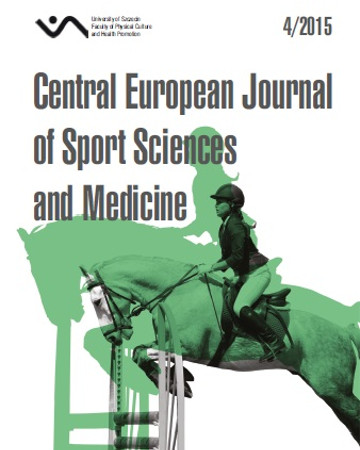
Central European Journal of Sport Sciences and Medicine
Statystyki OpenAlex
Dla całego czasopisma, według OpenAlex.
- Cytowania
- 1 077
- Publikacje
- 412
- H-index
- 12
- I10-index
- 22
- Średnia cytowań (2 lata)
- 0,43
Pokaż dane w tabeli
| Rok | Publikacje | Cytowania |
|---|---|---|
| 2017 | 42 | 37 |
| 2018 | 33 | 45 |
| 2019 | 35 | 56 |
| 2020 | 38 | 112 |
| 2021 | 38 | 106 |
| 2022 | 31 | 146 |
| 2023 | 30 | 150 |
| 2024 | 29 | 161 |
| 2025 | 30 | 132 |
| 2026 | 16 | 67 |
Dane pobrane:
Co oznaczają te liczby?
Publikacje i cytowania obejmują rekordy powiązane z tym czasopismem w OpenAlex. H-index to największa liczba h publikacji mających co najmniej h cytowań. I10-index to liczba publikacji cytowanych co najmniej 10 razy. Wykres przedstawia cytowania otrzymane w danym roku; bieżący rok jest niepełny. Zakres bazy może różnić się od WNUS i innych serwisów.
Średnia z 2 lat jest wskaźnikiem OpenAlex. Nie jest to Journal Impact Factor firmy Clarivate.
Factors Associated with Physical Activity in People with Diabetes
DOI: 10.18276/cej.2015.4-08
Cytuj
Pełny tekst jest dostępny
| ISSN: | 2300-9705 |
| eISSN: | 2353-2807 |
| Autorzy: |
Ewa
Głowacka
Private Specialized Nursing Practice, Mierzyn, Poland Agnieszka Latkowska Elżbieta Sieńko-Awieraniów Faculty of Physical Culture and Health Promotion, University of Szczecin, Poland Marta Stępień-Słodkowska Faculty of Physical Culture and Health Promotion, University of Szczecin, Poland |
| Słowa kluczowe: | physical activity diabetes mellitus Body Mass Index lifestyle |
| Data publikacji całości: | 2015 |
| Liczba stron: | 9 (73-81) |
| OAI-PMH: | Metadane |
| Cited-by (Crossref) ?: | Włącz JavaScript, aby pobrać dane cytowań. |


| |
Abstrakt
Background: Diabetes mellitus is a chronic disease related to the occurrence of numerous metabolic disorders. Their common feature is hyperglycaemia, caused by insufficient insulin secretion or its malfunction. The World Health Organization states that 346 million people worldwide have diabetes. The studies in adults with type 2 diabetes clearly demonstrate that the change of lifestyle behaviours effectively improves glycemic control. The modifications of lifestyle habits, such as regular physical activity and healthier dietary habits prove to be beneficial for patients. The aim of this study was to determine the factors affecting the level of physical activity in people with diabetes mellitus. Methods: Research material consisted of the data gathered from a diagnostic survey, which was conducted in a form of a questionnaire. The study included 60 people with type 1 or type 2 diabetes. Results: Unfortunately, the results show that not all of them were active enough, which is so crucial for stabilizing the disease. Conclusions: The diagnosis of diabetes in the respondents resulted in more time being spent by them on physical activity, which resulted in the improvement of diabetes control and the normalization of body weight according to BMI, thus increasing the effectiveness of diabetes treatment and reducing complications. The frequency of the physical activity undertaken by the respondents prior to the disease was not related to gender, however, after the diagnosis, it was dependent on gender
Podgląd PDF
Bibliografia (23)
- Bason C., Lorini R., Lunardi C., Dolcino M., Giannattasio A., d’Annunzio G., Rigo A., Pedemonte N., Corrocher R., Puccetti A. In type 1 diabetes a subset of anti-coxsackievirus b4 antibodies recognize autoantigens and induce apoptosis of pancreatic Beta c
- Centis E., Trento M., Dei Cas A., Pontiroli A.E., De Feo P., Bruno A., Sasdelli A.S., Arturi F., Strollo F., Vigili De’ Kreutzenberg S., Invitti C., Di Bonito P., Di Mauro M., Pugliese G., Molteni A., Marchesini G. Stage of change and motivation to health
- Daniele T.M., Bruin V.M., Oliveira D.S., Pompeu C.M., Forti A.C. Associations among physical activity, comorbidities, depressive symptoms and health-related quality of life in type 2 diabetes. Arq Bras Endocrinol Metabol. 2013; 57 (1): 44–50.
- Edmunds S., Roche D., Stratton G., Wallymahmed K., Glenn S.M. Physical activity and psychological well-being in children with type 1 diabetes. Psychol. Health Med. 2007; 12: 353–363.
- Gertig H., Przysławski J. Bromatologia. PZWL Warszawa 2006: 374.
- Grodzicki T., Gryglewska B., Tomasik T., Windak A. Zasady postępowania w nadciśnieniu tętniczym. Gerontologia Polska. 2012; 20 (4): 119–147.
- Plotnikoff R.C., Costigan S.A., Karunamuni N.D., Lubans D.R. Community-based physical activity interventions for treatment of type 2 diabetes: a systematic review with meta-analysis. Front Endocrinol (Lausanne). 2013; 4: 3.
- Pranoto A. Guidelines on the Management and Prevention of Prediabetes. The Indonesian Diabetes Association Diabetes and Nutrition Center, Comprehensive Diagnostic Center Building, Surabaya, Indonesia. Acta Medica Indonesiana – The Indonesian Journal of In
- Quirk H., Blake H., Tennyson R., Randell T.L., Glazebrook C. Physical activity interventions in children and young people with Type 1 diabetes mellitus: a systematic review with meta-analysis. Diabet Med. 2014; 31 (1): 1163–1173.
- Raczyńska B., Zubik Ł., Jeliński M. Diabetes vs. physical exercise. Polish Journal of Sport and Tourism. 2011; 18: 3–16.
- Reyden L., Standhl E., Bartnik M., Berghe GVd. Guidelines on diabetes, pre-diabetes, and cardiovascular disease. Betteridge J. Eur Heart J. 2007; 1–72.
- Roshan B., Stanton R.C. A story of microalbuminuria and diabetic nephropathy. J Nephropathol. 2013; 2 (4): 234–240.
- Sicree R., Shaw J., Zimmet P. The Global Burden, Diabetes and Impaired Glucose Tolerance. IDF Diabetes Atlas. 2009; (4th ed.): 1–15.
- Sieradzki J., Grzeszczak W., Karnafel W., Wierusz-Wysocka B., Manikowski A., Szymoński T. Badanie PolDiab Część I. Analiza leczenia cukrzycy w Polsce. Diabetologia Praktyczna.2006; 7 (1).
- Sierakowska-Sitkiewicz K., Karnafel W. Leczenie skojarzone cukrzycy typu 2. Nowa Klin. 2008; 15: 24–26.
- Simmons R.K., Unwin N., Griffin S.J. International Diabetes Federation: an update of the evidence concerning the prevention of type 2 diabetes. IDF Diabetes Atlas, (4th ed.) 2009.
- Techmańska I., Sieracki P., Myśliwiec M. Osiągnięcia sportowe a cukrzyca. In: Cukrzyca. Tom 1. Ed. J. Sieradzki. Via Medica, Gdańsk. 2006; 136–141.
- Van den Brom C.E., Bulte C.S., Loer S.A., Bouwman R.A., Boer C. Diabetes, perioperative ischaemia and volatile anaesthetics: consequences of derangements in myocardial substrate metabolism. Cardiovasc Diabetol. 2013; 12 (1): 42.
- Wittmeier K.D., Wicklow B.A., Sellers E.A., Griffith A.T., Dean H.J., McGavock J.M. Success with lifestyle monotherapy in youth with new-onset type 2 diabetes. Paediatr Child Health. 2012; 17 (3): 129–132.
- Younk L., Tate D., Davis S. Physical activity in adolescents with type 1 diabetes: is more better for glycemic control? Ped. Diabetes. 2009; 10: 231–233.
- Zatońska K., Ilow R., Regulska-Ilow B., Różańska D., Szuba A., Wołyniec M., Einhorn J., Vatten L., Asvold B.O., Mańczuk M., Zatoński W.A. Prevalence of diabetes mellitus and IFG in the prospective cohort ‘PONS’ study – baseline assessment. Annals of Agric
- Zdrojowy K., Sutkowska E., Adamiec R. Wysiłek fizyczny a kontrola metaboliczna cukrzycy. Med. Sportowa. 2005; 21: 370–372.
- Zhang F., Xu X., Zhang Y., Zhou B., He Z., Zhai Q. Gene expression profile analysis of type 2 diabetic mouse liver. PLoS One. 2013; 8 (3): e57766.