
Acta Iuris Stetinensis
Previously: Zeszyty Naukowe. Roczniki Prawnicze
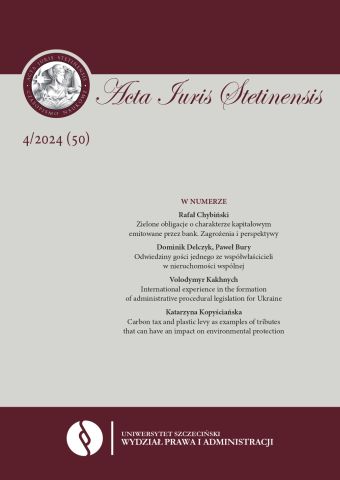
Czy w polskim prawie karnym procesowym jest miejsce na nowy warunkowy tryb wnioskowy ścigania przestępstwa wprowadzony w art. 12 § 4 k.p.k.?
(Is there room for a new mode of conditional prosecution motion in Polish criminal procedure law as introduced in Article 12(4) of the Code of Criminal Procedure?)
DOI: 10.18276/ais.2024.50-08
Cite
The full text is available
| ISSN: | 2083-4373 |
| eISSN: | 2545-3181 |
| Authors: |
Jagoda
Sobczak

Uniwersytet Warszawski |
| Keywords: | motion for prosecution criminal threats public interest |
| Issue / book publication date: | 2024-12 |
| Page range: | 12 (121-132) |
| OAI-PMH: | Metadata |
| Downloads ?: | 1450 |

 

 
| |
Abstract
The amendment to the Criminal Code on 7 July 2022 added Article 12(4) to the Code of Criminal Procedure. This article allows for the prosecution of a criminal threat even without a motion, under certain conditions. These conditions include the victim’s fear of retaliation or the public interest at stake. The study of the law in force, an analysis and comparison were methods employed to write this paper. The author juxtaposed the amendment with existing modes of prosecuting crimes ex officio and upon a complaint, particularly highlighting the reasons for having a motion-based mode. The article also evaluates the legislative correctness and purpose of the new article and its historical context by referring to changes in the mode of prosecution of criminal threats. Although the provision gathered some criticism, the author presented arguments for introducing a conditional motion-based mode of prosecuting this crime into Polish procedural criminal law.
Preview PDF
Bibliography (23)
- Czarnecki P., Najnowsza nowelizacja procedury karnej z 7.07.2022 r. – bez ładu, bez składu, bez pomysłu, https://karne24.com/najnowsza-nowelizacja-procedury-karnej-z-7- 07-2022-r-bez-ladu-bez-skladu-bez-pomyslu.
- Czekaj M., Ingerencja prokuratora w sprawach o przestępstwa prywatnoskargowe, „Prokuratura i Prawo” 1999, nr 7–8.
- Daszkiewicz-Paluszyńska K., Groźba w polskim prawie karnym, Warszawa 1958.
- Dąbrowska-Kardas M., Kardas P., w: A. Zoll (red.), Komentarz do k.k. Część szczególna, t. 3, Kraków 1999.
- Dudka K., Mozgawa M., Ingerencja prokuratora w ściganie przestępstw prywatnoskargowych, w: A. Siemaszko (red.), Stosowanie prawa. Księga jubileuszowa z okazji XX-lecia Instytutu Wymiaru Sprawiedliwości, Warszawa 2011.
- Gardocki L., Prawo karne, Warszawa 2000.
- Grajewski J., Przebieg procesu karnego, Warszawa 2001.
- Janczur E., Stanek G., Antoniak-Drożdż A., Burzyński P., Satszak A., Mrozowski D., Opinia Stowarzyszenia Lex Super Omnia do projektu ustawy o zmianie ustawy – Kodeks karny oraz niektórych innych ustaw (druk 762), https://lexso.org.pl/2022/07/19/ opinia-stowarzyszenia-lex-super-omnia-do-projektu-ustawy-o-zmianie-ustawykodeks- karny-oraz-niektorych-innych-ustaw-druk-762.
- Kluza J., Prowadzenie postępowania z urzędu mimo braku wniosku o ściganie w sprawie o przestępstwo z art. 190 § 1 k.k. na podstawie art. 12 § 4 k.p.k., „Przegląd Prawa Publicznego” 2023, nr 6.
- Kluza J., Wniosek o ściganie przestępstwa w procesie karnym, „Przegląd Prawno-Ekonomiczny” 2018, nr 2.
- Kmiecik R., Skrętowicz E., Proces karny. Część ogólna, Kraków–Lublin 1999.
- Kulesza C., w: K. Dudka (red.), Kodeks postępowania karnego. Komentarz, wyd. III, Warszawa 2023.
- Kurowski M., Komentarz do art. 12 k.p.k., w: D. Świecki (red.), Kodeks postępowania karnego. Komentarz, t. I, wyd. VII, Warszawa 2024.
- Linke M., Das besondere öffentliche Interesse an der Strafverfolgung bei relative Antragsdelikten, Berlin 2021.
- Mozgawa M., w: M. Budyn-Kulik, P. Kozłowska-Kalisz, M. Kulik, M. Mozgawa, Kodeks karny. Komentarz aktualizowany, LEX/el. 2023.
- Murzynowski A., Istota i zasady procesu karnego, Warszawa 1994.
- Nazar-Gutowska K., Groźba bezprawna w polskim prawie karnym, Warszawa 2012.
- Nestor I. B., Wnioskowy tryb ścigania przestępstw w polskim i niemieckim prawie karnym, „Ruch Prawniczy, Ekonomiczny i Socjologiczny” 2001, z. 4.
- Siewierski M., Tylman J., Olszewski M., Postępowanie karne w zarysie, Warszawa 1971.
- Skorupka J., Proces karny, Warszawa 2020.
- Waltoś S., Naczelne zasady procesu karnego, Warszawa 1999.
- Warylewski J., Prawo karne. Część ogólna, Warszawa 2020.
- Wojciechowska J., w: B. Kunicka-Michalska, J. Wojciechowska (red.), Przestępstwa przeciwko wolności, wolności sumienia i wyznania, wolności seksualnej i obyczajności oraz czci i nietykalności cielesnej. Rozdziały XXIII, XXIV, XXV i XXVII Kodeksu karnego. Komentarz, Warszawa 2001.